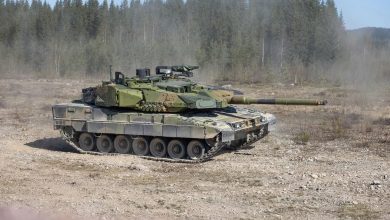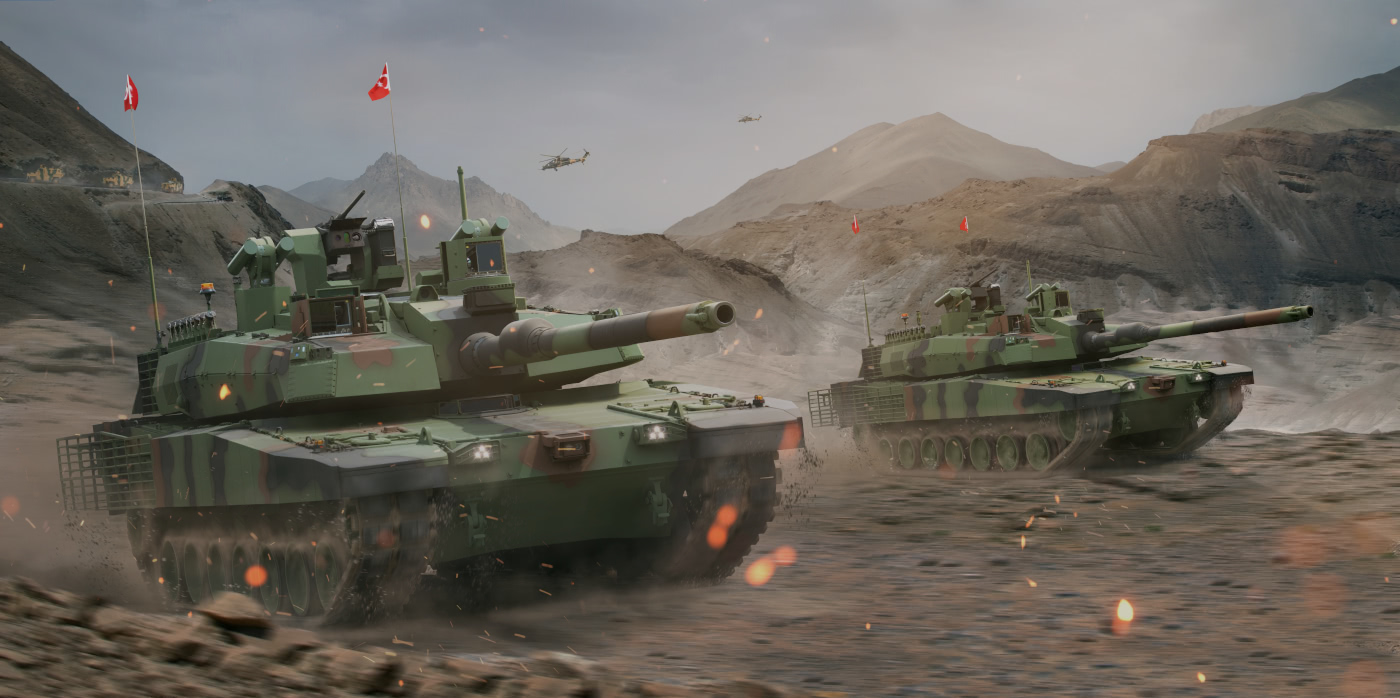
Turkey has formally handed over its first homegrown BMC Altay main battle tanks to the Turkish Armed Forces in the Kahramankazan district.
The ceremony, led by President Recep Tayyip Erdoğan, included three Altay tanks each equipped with modern armor, advanced targeting systems, and a 360-degree defense suite designed to counter missiles and direct fire.
Many of the tank’s core systems, such as sensors, optics, and control electronics, were developed locally to reduce dependence on foreign suppliers.
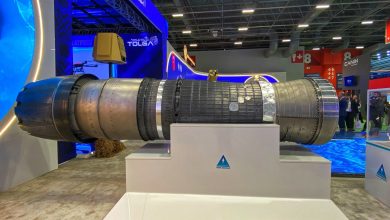
Early models use South Korean-made engines, while future versions will feature the domestically built BATU power unit, now in road testing.
The Altay project began in 2007 but faced years of setbacks due to export restrictions. Erdoğan said the NATO country pressed ahead despite these challenges.
“With Altay, we have ushered in a new era in tank technology,” Daily Sabah reported, quoting Erdoğan as saying during the Kahramankazan event. “We’re moving steadily toward a defense industry that stands fully on its own.”
Boosting Production
The delivery also marked the opening of a Tank and Next-Generation Armored Vehicles Production Facility, an 840,000-square-meter (9,041,685-square-foot) complex to support the fleet’s assembly and distribution.
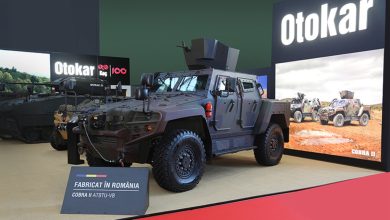
Ankara said that Altay developer BMC will produce eight Altay tanks at the factory per month, totaling nearly 100 each year. The site will also assemble 10 Altuğ 8×8 armored vehicles monthly.
The center will employ around 1,500 people and will also cover testing and research on top of manufacturing.
Altay deliveries are set to increase gradually, with 11 tanks planned for 2026, 41 in 2027, and 30 in 2028 before switching to the Altay T2 variant powered by the BATU engine.
The Altay Main Battle Tank
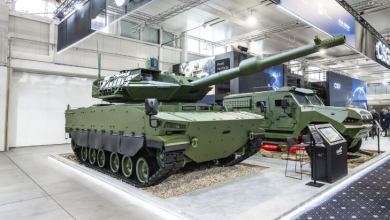
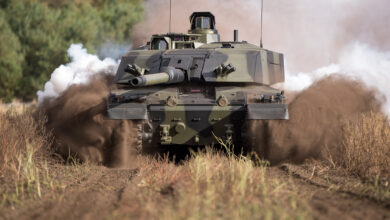
Modeled after the Republic of Korea Armed Forces’ K2 Black Panther main battle tank, the Turkish Altay system is armed with a 120-millimeter smoothbore gun and a remote-operated weapon station fitted with 12.7-millimeter and 7.62-millimeter machine guns.
Its South Korean engine and the incoming indigenous engine both have an output of 1,500 horsepower, while the vehicle’s transmission in its standard T1 and future T2 variants will have a 6-speed transmission.
The platform’s protection includes Roketsan composite armor based on the Korean Special Armor Plate, as well as the Aselsan protection system with hard kill, soft kill, and electronic warfare functions.
The vehicle measures 7 meters (23 feet) long and weighs 65,000 kilograms (143,300 pounds). It has an operational range of 450 kilometers (280 miles) and reaches a top speed of 65 kilometers (40 miles) per hour on paved surfaces and 45 kilometers (28 miles) per hour on rough roads.