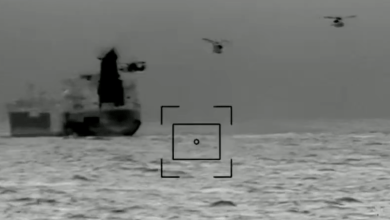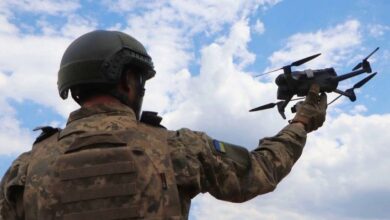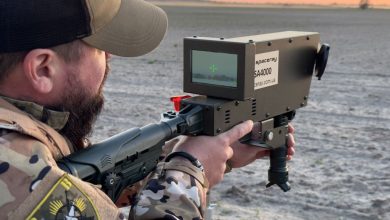
NATO and Ukraine have completed another testing phase of a solution made for countering Russia’s long-range guided aerial bombs at a French test range.
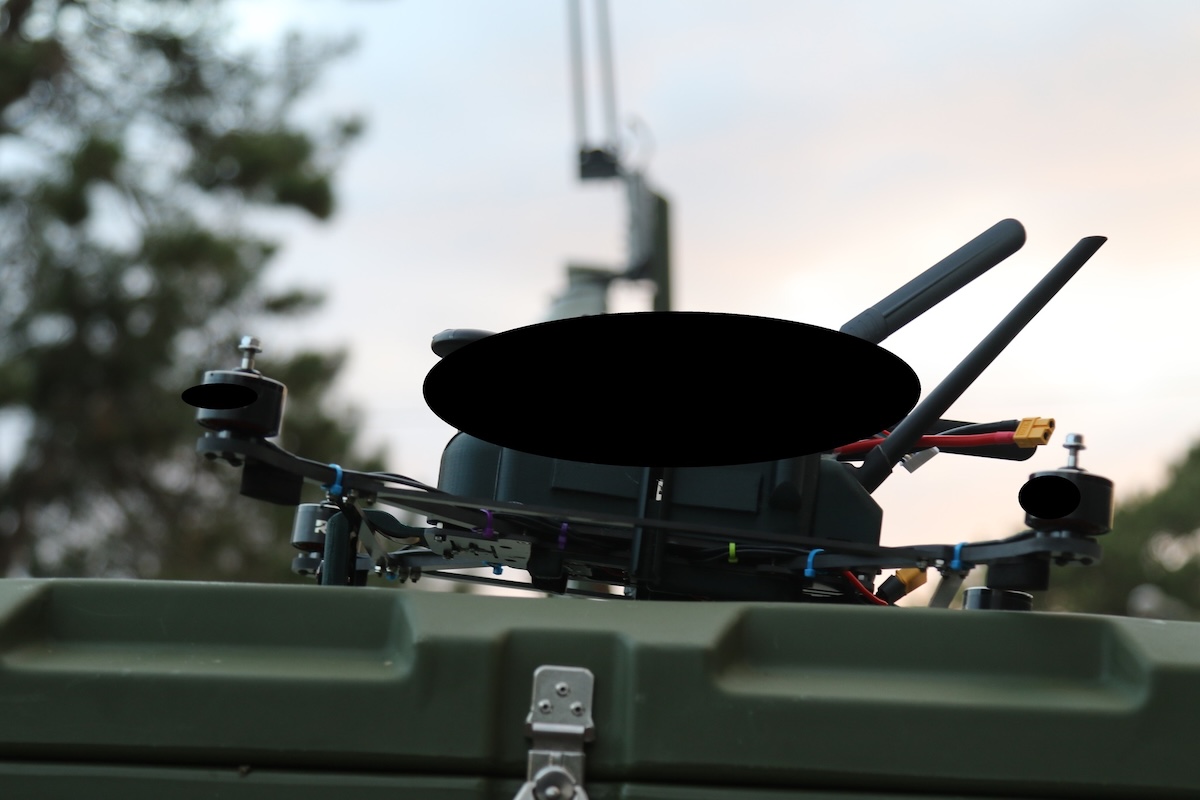
Teams from the NATO-Ukraine Joint Center for Analysis, Training, and Education and NATO’s Allied Command Transformation ran and assessed the system’s radar, artificial intelligence software, and a drone interceptor under adverse weather conditions.
The test observed that the radar, fitted with an advanced sensor, was able to identify, track, and capture the simulated target, while the AI-enabled interceptor followed a pre-calculated trajectory to engage the enemy target.
Russian Glide Bomb Threat
Russia’s guided aerial bombs — retrofitted smart versions of older Soviet bombs, also known as “KABs” — have been devastating Ukrainian positions and cities in the ongoing war.
The KABs are equipped with wings and precision guidance systems that allow them to glide long distances before impact, enabling the deploying aircraft to remain outside the range of Ukrainian air defenses.
Each comes with a warhead ranging from about 300 kilograms (661 pounds) to 1.5 metric tons (3,307 pounds), and the upgraded variants reportedly reach nearly 200 kilometers (124 miles), according to the Kyiv Independent.
“One test reached 193 kilometers. These weapons were first used on Dnipro, and now we’re seeing them appear in other cities,” said Deputy Chief of Ukraine’s Defence Intelligence, Vadym Skibitskyi.
Ukraine currently has no effective defense against them.
Aiming to fill that gap, the NATO-Ukraine project against the aerial bombs emerged from the 15th NATO Innovation Competition in March 2025.
Among 40 competing teams, three winners were selected to develop capabilities: the French Alta Ares with AI detection algorithms, German Tytan Technologies with interception systems, and French ATREYD with swarms of container-based interceptors.
The system has moved from concept to prototyping at various levels of technological implementation within less than a year, with Ukrainian specialists taking part in the trials and providing feedback.