Military surgeons have reported that injuries for Ukrainian soldiers are increasing in severity, reflecting changes in Russian combat tactics, according to ArmyInform, the official news agency of the Armed Forces of Ukraine.
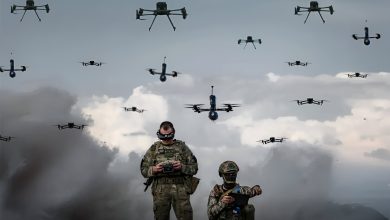
The growing use of drones, equipped with high-explosive and fragmentation munitions, has become the primary source of these complex, multi-site injuries.
The primary cause of death is bleeding, especially from damage to major arteries, where survival depends on applying a tourniquet within minutes.
Around 80 percent of wounded soldiers require surgery to control hemorrhaging, much of it internal.
Injuries to major blood vessels in the legs account for roughly 70 percent of such cases, while arm injuries make up about 30 percent.
About 81 percent of battlefield injuries are shrapnel-related, while bullet wounds account for about 19 percent.
“We clearly note that shrapnel wounds have an advantage over bullet wounds and as a result of such hits, large tissue defects arise,” stated Kostiantyn Humeniuk, chief surgeon of the Armed Forces of Ukraine.
Adapting Medical Tools
To address evolving battlefield injuries, Ukrainian military doctors are using new minimally invasive surgical methods and medical technologies.
Medical staff have introduced thoracoscopy for gunshot wounds to the heart, a procedure involving a small chest puncture through which instruments are inserted to open the pericardium and remove metal fragments without large incisions.
Magnets are also applied in laparoscopic surgeries to locate and extract bullets or shrapnel through small punctures.
Modern stapler devices are used to close gunshot wounds by clamping the affected area and applying three rows of titanium staples, eliminating the need for manual suturing.
Negative pressure wound therapy is increasingly used to promote faster healing.
The method involves placing a sealed system over the wound and connecting it to a vacuum device that removes fluids and helps the tissue close.
Moreover, the Resuscitative Endovascular Balloon Occlusion of the Aorta system, used to control internal bleeding from abdominal injuries, is currently deployed in about 40 units across Ukraine.