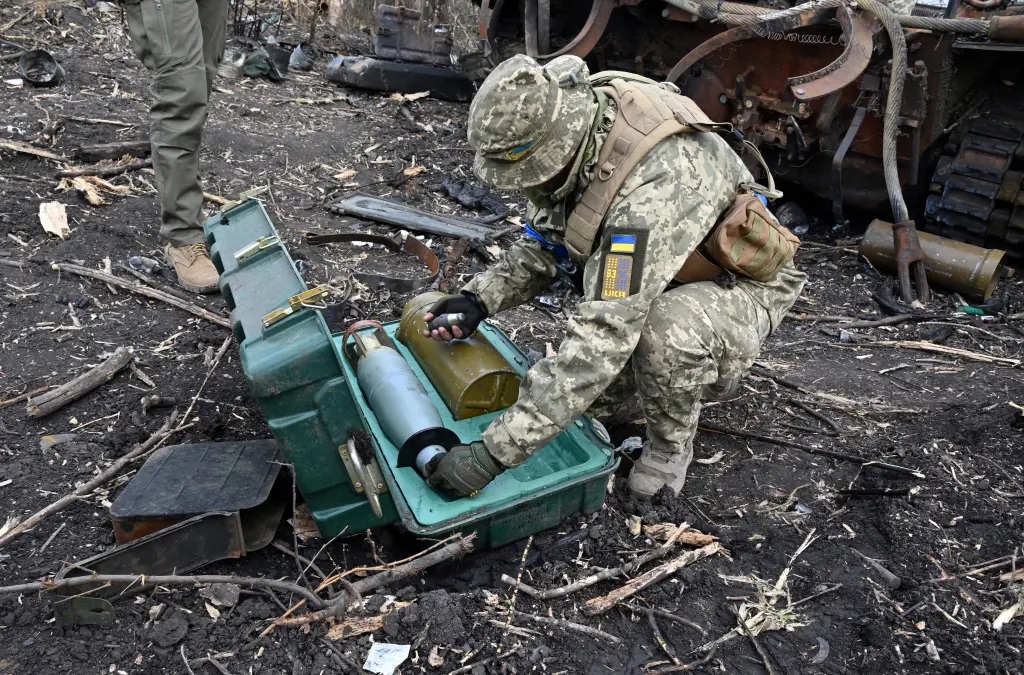
Russian forces have unleashed more than 11,000 chemical weapon attacks since the start of their full-scale invasion of Ukraine, exposing at least 3,000 Ukrainian troops to toxic agents, Kyiv’s military claimed on Sunday.
The figures, presented by the Ukrainian Armed Forces’ Chemical, Biological, Radiological and Nuclear (CBRN) Defense Directorate, paint a grim picture of Russia’s battlefield tactics as the war grinds into its fourth year.
Dutch and German intelligence services had already cautioned in July that Moscow was escalating chemical attacks in Ukraine, a development seen as a potential war crime under international law.
Colonel Artem Vlasiuk, who heads the directorate’s Civil Protection Department, said Moscow’s troops have repeatedly deployed K-51 and RGVO tear-gas grenades, as well as improvised explosives packed with chlorine and ammonia.
These chemical agents are used, he explained, to “smoke out” Ukrainian defenders from trenches and fortified shelters where conventional firepower has failed to dislodge them.
CBRN Defense Head and Acting Commander Ihor Diak noted that the confirmed 3,000 cases only reflect verified poisonings or exposures. The true number could be much higher, as not all casualties can be evacuated or medically assessed in time.
“We are only naming figures that are officially confirmed and documented,” Diak stressed.
Fatalities of Chemical Attacks Not Yet Confirmed
Ukrainian officials, however, stressed that their data reflects only confirmed injuries and cases of poisoning, not fatalities directly linked to chemical exposure.
Vlasiuk explained that establishing a death caused by such attacks requires a “multifactorial review” — including interviews with the soldiers, inspection of their equipment, and an assessment of the site where they were operating.
Ukraine has repeatedly accused Russia of violating the Chemical Weapons Convention, which bans the use of toxic agents in war. In December 2024, Ukrainian authorities had already documented at least 4,800 chemical weapon-related attacks that led to over 2,000 hospitalizations.
In November 2024, the Organisation for the Prohibition of Chemical Weapons confirmed during a field visit and subsequent analyses the presence of riot control agents in grenade and soil samples.
Riot agents, according to the Chemical Weapons Convention, are chemicals that can “produce rapidly, in humans, sensory irritation or disabling effects which disappear within a short time following termination of exposure.”