Arab League member countries are reportedly reconsidering a “NATO-style” collective security force in the region first proposed by Egypt in 2015, insider sources have informed The National.
The development comes as Arab countries show support following the Israeli air strikes that targeted Hamas officials in Qatar, and will likely be discussed on the sidelines of the Arab–Islamic summit convened in Doha.
Cairo’s proposed security alliance 10 years ago was drawn as a response to the growing threat of armed groups, like the Houthis and the Islamic State. However, it did not materialize due to unresolved differences over several issues, including sovereignty and command structure.
Unified Military Coalition
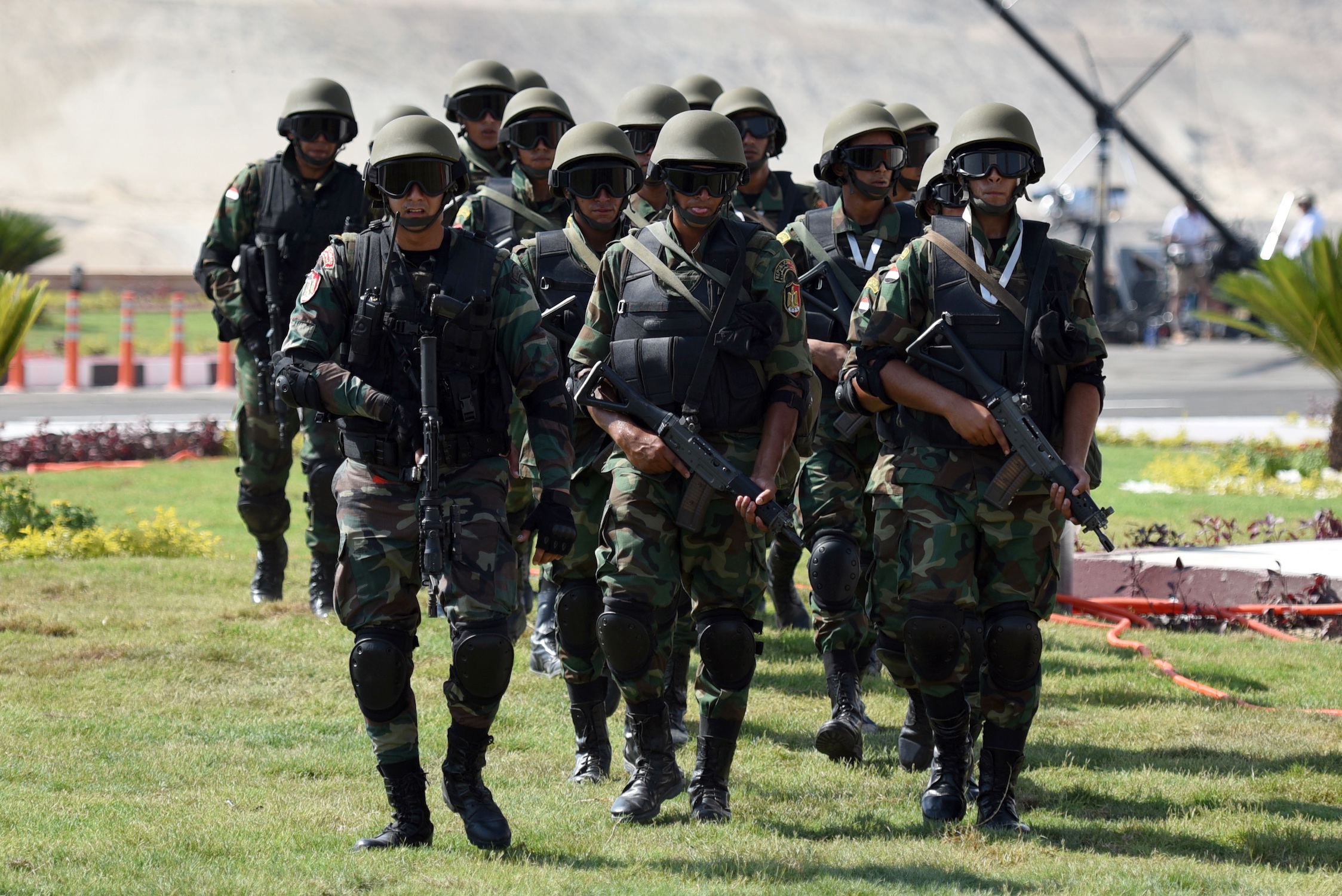
Sources familiar with the matter disclosed that the planned joint military force is expected to comprise naval, air, and ground units, along with troops specializing in commando, counterterrorism, and peacekeeping missions within the region.
It would purportedly “deal with security threats and terrorism or anyone who poses a threat to the Arab world’s safety and stability.”
Leading the largest military manpower in the Middle East and North Africa region, Egypt’s plan included having Cairo as the headquarters and an Egyptian to serve as the first commander before the role rotates among the Arab League’s remaining 21 members.
A Chief of Staff would be selected from one of the member countries, while the Secretary-General would be a civilian.
The commander and the Chief of Staff would hold the power to approve formal requests from a country intending to use force against another, following consultations with all participating members.
The force would also have a planning council focused on training, logistics, and weapon systems interoperability.
Finally, contributions would depend on a country’s military size and capabilities.
“Whatever gains Israel has made regionally in the past two years … are jeopardized by its brutality in Gaza and overall hubris,” Barbara Slavin, a Middle East fellow at the Stimson Centre, told South China Morning Post.
“If the US won’t stop it, the region has to try.”