Japan, UK, Italy Team Up on Next-Gen Fighter Sensors and Communications

Defense firms from Japan, the UK, and Italy have formed a consortium to design and develop the sensing and communications systems for the Global Combat Air Programme (GCAP), a next-generation combat aircraft project.
The consortium includes Mitsubishi Electric for Japan, Leonardo UK for the UK, and Leonardo and ELT Group for Italy.
Named GCAP Electronics Evolution, the consortium is preparing to receive a contract from Edgewing, a joint venture of BAE Systems (UK), Leonardo (Italy), and Japan Aircraft Industrial Enhancement (Japan).
Edgewing will serve as the lead systems integrator for GCAP.
Under the initiative, the companies will deliver the Integrated Sensing and Non-Kinetic Effects & Integrated Communications Systems (ISANKE & ICS) and associated support services.
ISANKE & ICS will be the main sensing and communications system for GCAP, designed to integrate and process large volumes of operational data.
GCAP Electronics Evolution’s leadership team will be based in Reading, southeast England, near the GCAP International Government Organisation, for coordination with the three national ministries of defense and Edgewing.
Under the consortium initiative, the partners “will continue to leverage the expertise and resources of each participating country, through deepening trilateral cooperation, to enhance security across Europe and Asia-Pacific for decades to come,” stated Leonardo.
Global Combat Air Programme
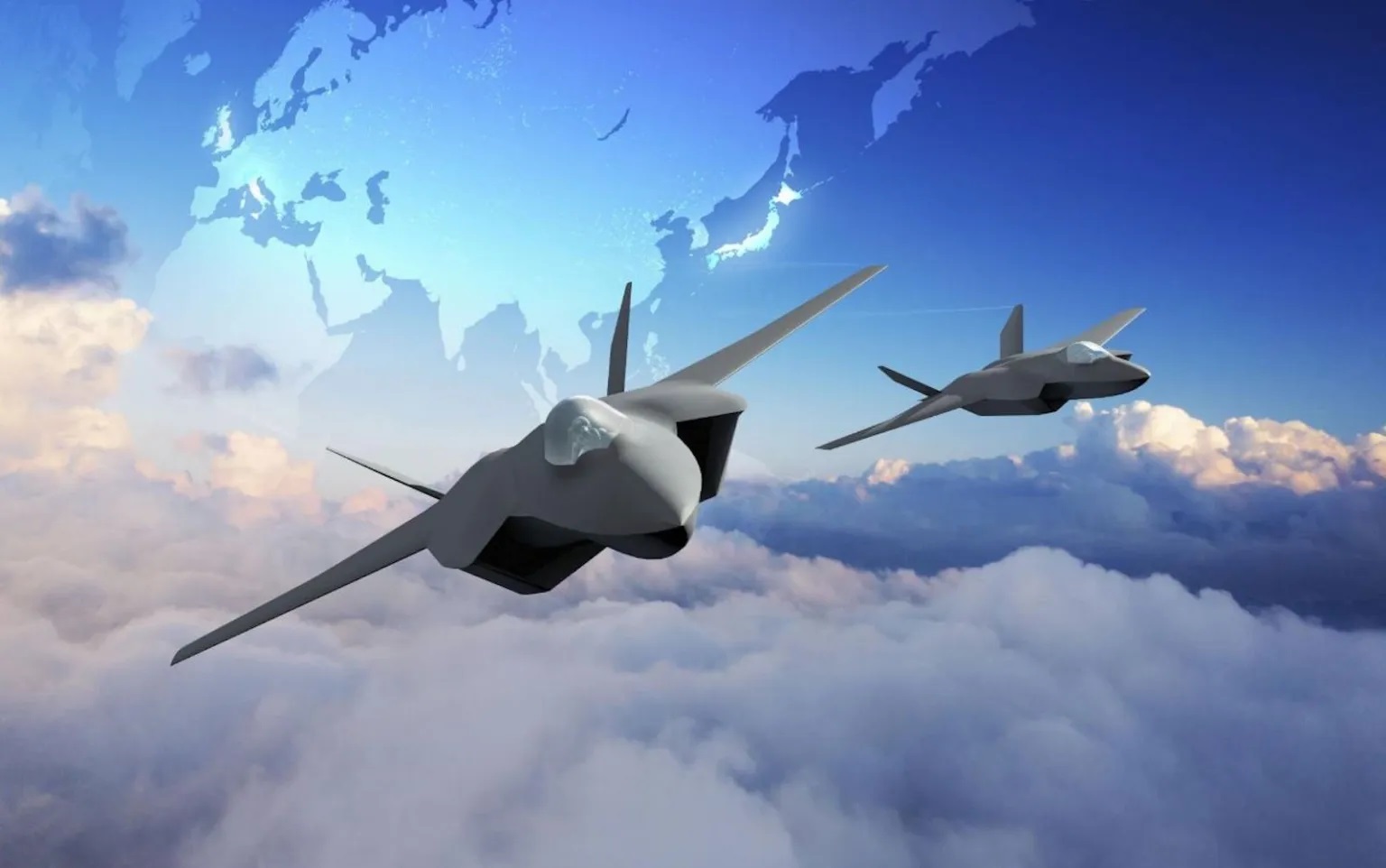
The GCAP aims to replace the Eurofighter Typhoons operated by the Royal Air Force and the Italian Air Force, as well as the Mitsubishi F-2 multi-role fighter used by the Japan Air Self-Defense Force.
Scheduled for service by 2035, the aircraft will integrate current research from the three nations on advanced air combat technologies.
The future combat aircraft, described as a “system of systems,” will serve as the central platform, linked to other manned and unmanned technologies.
It will use a fully digital infrastructure integrating artificial intelligence, high-performance computing, a combat cloud architecture, and cyber-resilient capabilities.
A concept design was presented in July 2024, following the official start of the GCAP program in December 2022.