Northrop Grumman and the US Space Force have conducted the first demonstration of the Deep-Space Advanced Radar Capability (DARC) at Site 1 in Western Australia.
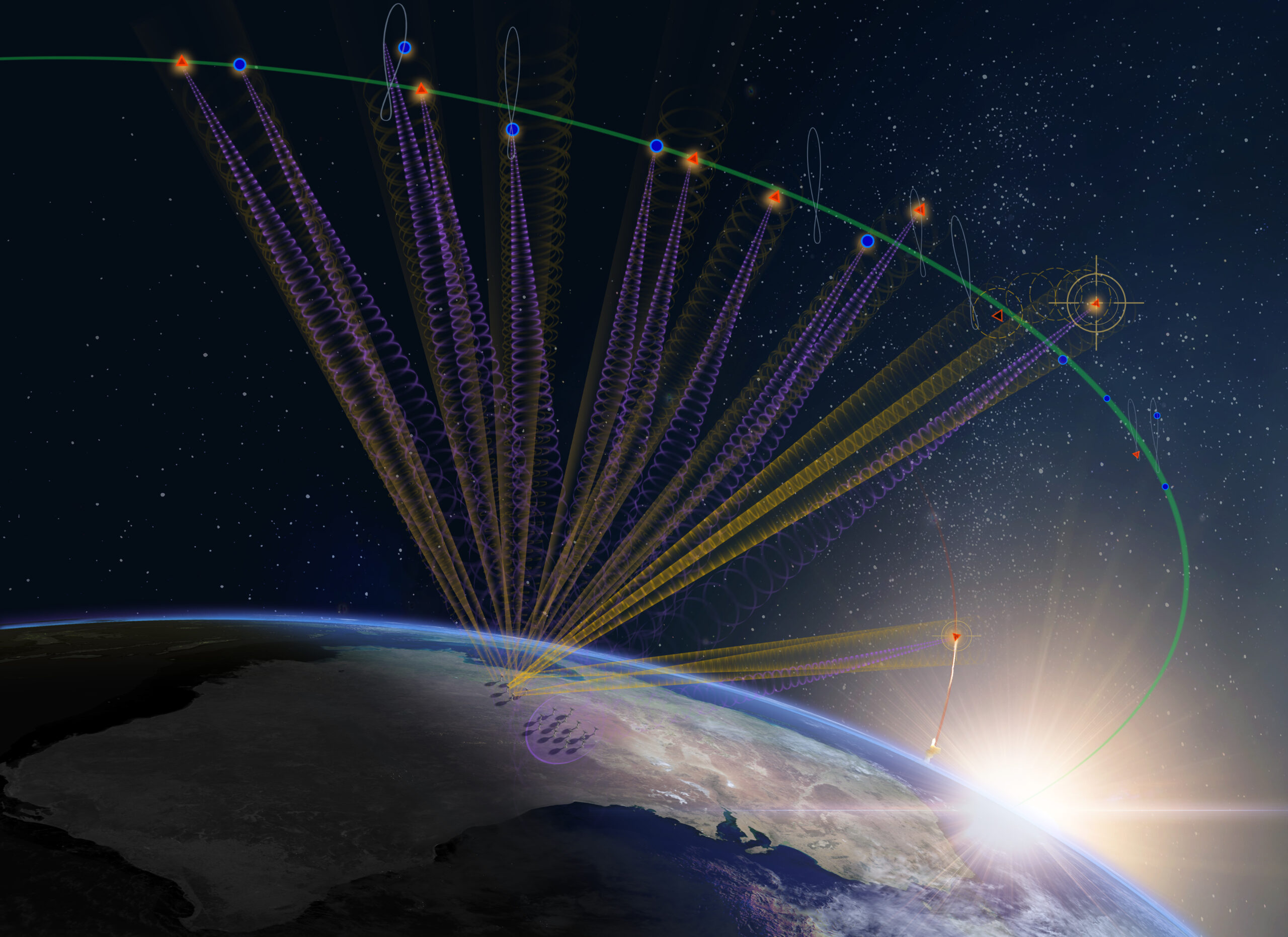
DARC is a next-generation ground-based system designed to track and monitor objects in space with high precision.
During the demonstration, seven of the 27 ground-based antennas were combined into a single array to track satellite movements.
The system’s precision tracking capabilities were validated through several weeks of data collection, analysis, and calibration, confirming operational readiness.
Unlike traditional optical sensors, which can be blocked by clouds, DARC operates continuously, providing full global coverage.
DARC can track objects at altitudes of up to 22,000 miles (35,400 kilometers), roughly the same distance as a trip around the equator.
The company emphasized that the recent test marks a key milestone as DARC moves closer to achieving full operational capability, providing a strategic advantage in space monitoring.
Kevin Giammo, director of Space Surveillance and Environmental Intelligence at Northrop Grumman, stated that DARC “will offer unmatched persistent and comprehensive capability as the world’s premier deep-space radar tracking system.”
DARC Program
The DARC program, a joint effort involving the US, UK, and Australia, is developing a ground-based sensor network to provide global coverage of the geostationary orbit, which is home to many critical military and commercial satellites.
The initiative aims to enhance space domain awareness and safeguard the satellites of the three nations and their allies against potential threats.
Last year, the US Space Force awarded Northrop Grumman a $200-million contract to build DARC Site 2 at Cawdor Barracks in Pembrokeshire, UK, with completion scheduled for 2030.
Work on the system for Site 1 was carried out under a $341-million contract signed in 2022.