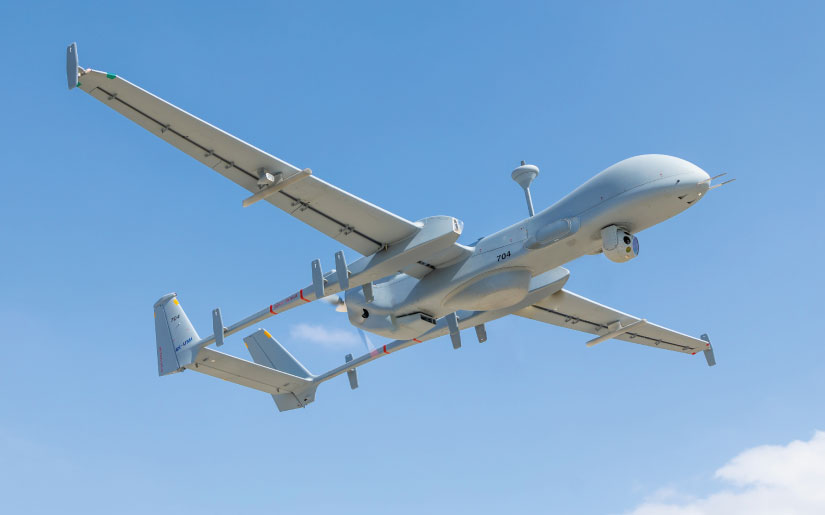
Israeli Heron-2 Drone Undergoes Testing in Japan, Signaling Potential Adoption

Japan is considering adding the Israeli-made Heron-2 unmanned aerial system to its arsenal, with the platform now undergoing tests in the country.
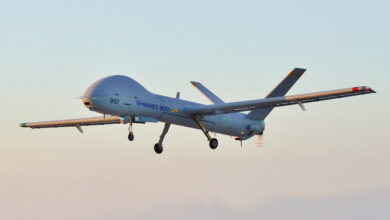
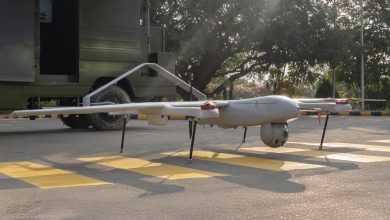
Built by Israel Aerospace Industries (IAI), the Heron-2 was recently spotted at a Japanese airport with an Israeli registration number and Kawasaki Heavy Industries markings, The Jerusalem Post reported.
The drone photographed was configured for electronic warfare. However, it is primarily deployed for reconnaissance and strike missions.
Kawasaki, which previously signed a cooperation deal with IAI, could produce the aircraft locally if Tokyo proceeds with a purchase.
The sighting marks the first documented test of an Israeli weapon system in Japan, according to the outlet.
Tokyo has previously bought components from Israeli firms but avoided full systems, partly due to the Arab boycott, until a 2020 defense agreement opened the door to sharing classified Israeli technology.
Meanwhile, Japan is also evaluating Turkey’s Bayraktar drone as part of its broader military buildup, which includes new surface combatants, a stealth fighter program with the UK, and increased unmanned capabilities.
Tokyo’s domestic production remains consistent, supported by the East Asian country’s manufacturing of its own variant of the US F-16 as well as different transport and patrol aircraft.
IAI’s Heron-2
The Heron-2, known as Shoval in Israeli service, is a baseline medium-altitude, long-endurance (MALE) platform designed for intelligence, surveillance, reconnaissance, and electronic warfare missions.
It has seen action in Iran and is operated by several countries, including Germany, India, and the Czech Republic.
The drone measures 9 meters (30 feet) long, has a 17-meter (56-foot) wingspan, a maximum takeoff weight of 1,150 kilograms (2,535 pounds), and can carry payloads up to 250 kilograms (551 pounds).
Powered by a Rotax 916 engine, the Heron-2 cruises at speeds of around 207 kilometers (129 miles) per hour, operates at altitudes up to 10,058 meters (30,000 feet), and can remain airborne for as long as 52 hours, enabling persistent coverage over wide areas.