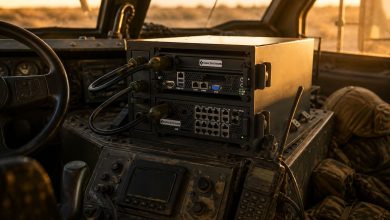
South Korea is upgrading its Allied Korean Joint Command and Control (AKJCCS) System to prepare for the potential transfer of wartime operational control (OPCON) from the US to Seoul.
With a 117.8-billion-won ($84.9 million) budget, the Seoul-developed system will receive its first significant upgrade since its deployment in 2015. The enhanced version is scheduled to be operational by 2029.
Work will begin in the second half of 2025, according to Seoul’s Defense Acquisition Program Administration (DAPA).
“The AKJCCS update project will be carried out as a comprehensive upgrade of the hardware and software, almost on par with the development of a new system,” the Korea Herald quoted a DAPA official as saying.
“We plan to successfully complete the update by effectively adopting the latest technology and policies into the system in a stable manner.”
System Upgrades
The homegrown AKJCCS is connected to the US Combined Enterprise Regional Information Exchange System – Korea (CENTRIXS-K) network.
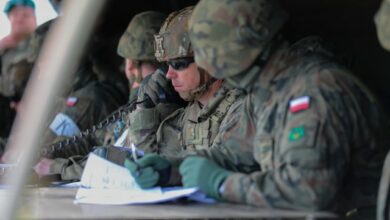
It serves as the central platform for the joint military units of the US and South Korea to coordinate information and operations on the Korean Peninsula.
For enhanced communications, it will be upgraded with automatic Korean-to-English translation and teleconferencing.
The command and control system will also be introduced with cloud-based servers, AI-assisted automation, real-time interpretation tools, and enhanced cybersecurity.
Wartime OPCON Transfer
Complete wartime operational control of South Korea’s military forces is a responsibility currently held by the US-led Combined Forces Command, dating back to the time of the Korean War.
Washington, due to its advanced military capabilities, maintained wartime OPCON for years as a deterrent against North Korean nuclear threats.
Its handover to South Korea was initially planned in the early 2010s but was postponed multiple times due to concerns about Seoul’s defense readiness, especially in command, control, surveillance, and reconnaissance.
This scheduled AKJCCS upgrade is a move toward increasing Seoul’s military sovereignty and readiness to assume leadership of wartime control of combined forces, and not an indication of a final transfer, sources familiar with the matter clarified with The Korea Times.