Turkish Aerospace Industries (TAI) has signed an agreement with Airbus to formalize the export of Ankara’s Hürjet indigenous trainer aircraft to Spain.
Unveiled at a defense expo in Istanbul, the partnership detailed each aerospace firm’s role in supporting Spain’s push to grow its trainer jet fleet.
It also expedited the process of integrating the Turkish system into the Spanish Air Force’s arsenal, according to Turkey’s state-owned news agency Anadolu.
Spain’s plan to adopt the Hürjet was revealed in 2024, with orders covering up to 30 aircraft, associated systems, and partial domestic assembly.
The final sales contract is expected to be signed by the end of this year, while initial shipments are set to be completed in 2028.
Upon delivery, the planes will gradually replace Madrid’s Northrop SF‑5M trainer jets in service since the 1960s.
Mehmet Demiroglu, general manager for TAI, said that the signing in Istanbul is an “important milestone in the European journey of Hurjet.”
“It is a testament to the technological level that the Turkish aviation industry has reached worldwide,” Demirogl commented.
“We believe that this agreement will further deepen defense industry cooperation between the two countries and pave the way for Turkish engineering to play a greater role in Europe’s future aviation projects.”
The TAI Hürjet System
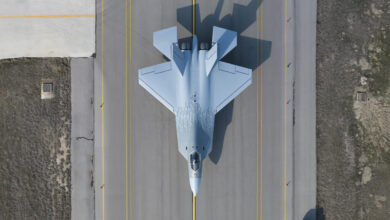
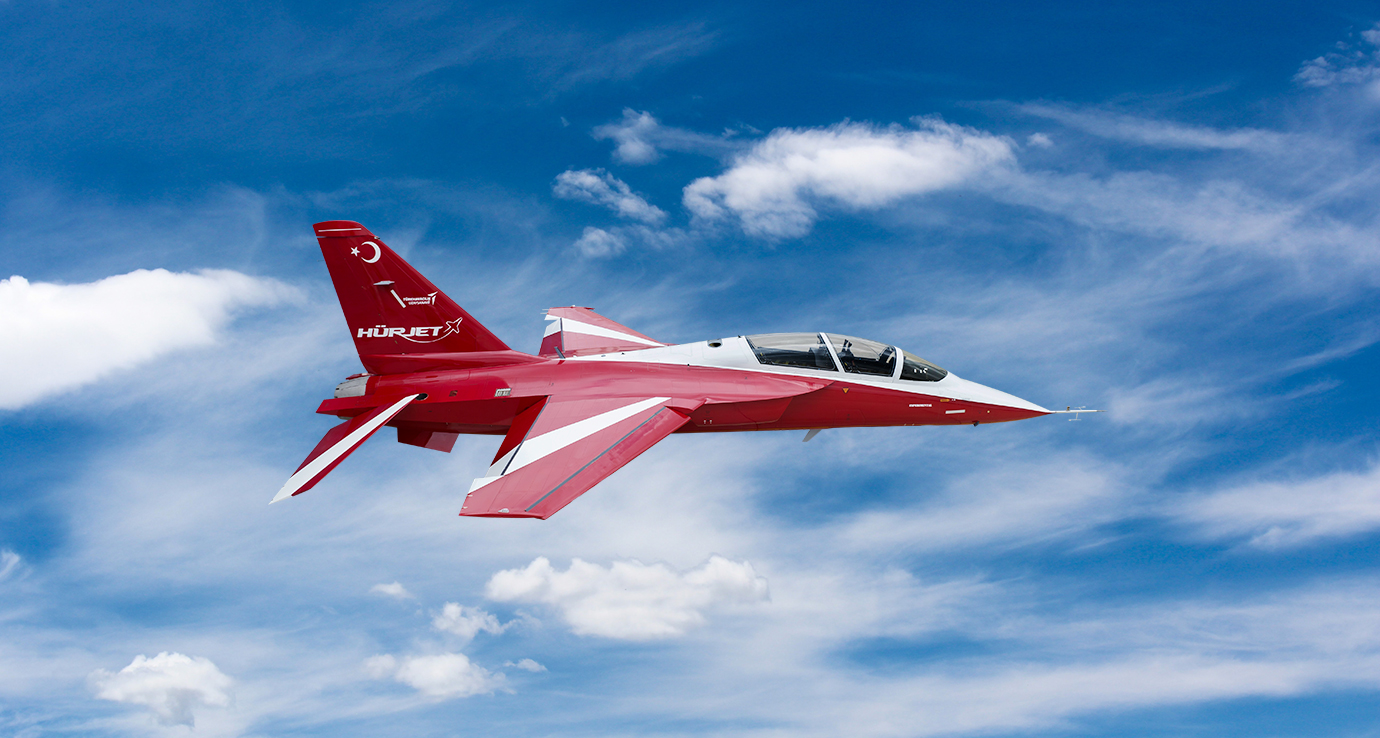
The Hürjet is a light supersonic aircraft originally designed to replace the Turkish Air Force’s Northrop T-38 Talon training fleet and provide close air support for the military’s General Dynamics F-16 Fighting Falcons.
It measures 14 meters (46 feet) long, has a wingspan of 10 meters (33 feet), and a payload capacity of 3,402 kilograms (7,500 pounds).
Fitted with a GE F404 afterburning turbofan, the plane reaches a top speed of Mach 1.4 (1,729 kilometers/1,074 miles per hour).
It has a range of 1,060 nautical miles (1,963 kilometers/1,219 miles) and a maximum altitude of 13,716 meters (45,000 feet).
Recent developments would eventually allow the jet to carry Turkish-made weapons, including the Gökdoğan and Bozdoğan air-to-air missiles, the SOM cruise missile, the Sarb‑83 anti-concrete bomb, and various guidance kits.