As war rages in eastern Ukraine, two armed groups — the Russian Volunteer Corps (RDK) and the Maksym Kryvonis Battalion (BMK) — fight on opposite sides.
Both are composed of individuals who’ve taken up arms against their own governments, siding with former enemies.
Their motives are rooted in deeply personal and political fractures. And their stories reveal the anatomy of individual tragedy amid the chaos of war.
In their homelands, they’re branded as traitors: accused of treason, scorned by the public, and demonized by state media. But who are they really — freedom fighters or defectors?
Answering that question requires a clear-eyed look at the painful choices that led them to the front lines, and an unfiltered examination of how these fighters are used and perceived by their new allies.
Who Are the Russian Volunteer Corps?
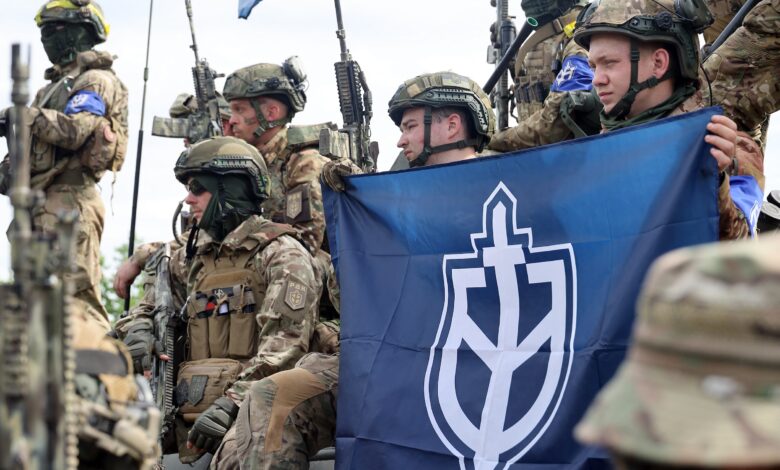
The Russian Volunteer Corps, formed in August 2022, is made up mostly of Russian émigrés who oppose Vladimir Putin’s regime.
Its leader, Denis Kapustin, known by the call sign “WhiteRex,” is notorious for his far-right views. The RDK frames itself as an anti-Kremlin paramilitary force aiming to topple Putin.
However, its activities have remained largely localized. The group has carried out cross-border sabotage raids in Russian regions like Belgorod and Bryansk, often with mixed results.
One high-profile raid in June 2023 briefly seized the Russian village of Novaya Tavolzhanka and took Russian soldiers prisoner. But rather than being a meaningful military operation, the raid was widely seen as a media spectacle aimed at generating attention in both Russia and Ukraine.
Inside Russia, the RDK is widely likened to WWII-era collaborationist forces such as the “Russian Liberation Army,” a comparison that underscores both its alienation from mainstream Russian society and its lack of popular legitimacy.
MKB: Betrayal or Patriotism?
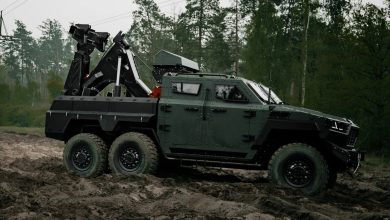
The Maksym Kryvonis Battalion, formed in the summer of 2023, consists of former Ukrainian troops now fighting for Russia.
The group is named after a 17th-century Cossack commander who aligned with the Russian Tsardom, a symbolic gesture linking the unit to a vision of Ukrainian-Russian unity.
The BMK portrays itself as seeking to “liberate” Ukraine from President Volodymyr Zelensky’s government, which it accuses of betraying the Ukrainian people.
According to its Telegram posts, the BMK is active in frontline combat, especially near Pokrovsk. It claims to have destroyed armored vehicles, drone control posts, and even killed foreign volunteers, including a Colombian fighter in January 2025.
Open-source information suggests that, compared to the RDK, the MKB undertakes a broader range of tasks, including evacuating wounded Russian soldiers from the front lines and rescuing civilians from combat zones.
Trust and Distrust on Opposite Fronts
Despite shared goals of removing their home regimes, these groups are viewed very differently by the countries they now serve.
The RDK, while ideologically opposed to Putin, is tainted by radical politics. Ukrainian authorities, wary of the group’s far-right roots and operational independence, have kept it at arm’s length.
Consequently, despite being subordinate to Ukraine’s Main Intelligence Directorate, the corps is not integrated into the Ukrainian Armed Forces’ combat structure, limiting its participation in large-scale military operations.
Moreover, its leadership’s insistence on operational autonomy — along with episodes like the use of Belgian weapons during a 2023 cross-border raid — have prompted diplomatic backlash and reinforced Kyiv’s mistrust.
By contrast, the Maksym Kryvonis Battalion has aligned itself more closely with Russian state narratives. It exhibits deep animosity toward Ukrainian authorities, accusing them of forced mobilization and sending citizens into what they view as a senseless war.
The group’s commitment to building an independent Ukraine allied with “brotherly” Russia, combined with moderate patriotism and a rejection of Ukrainian historical independence heroes (such as Stepan Bandera and Roman Shukhevych of the Ukrainian Insurgent Army during World War II), appears fragile yet aligns with the Kremlin’s expectations.
As a result, Russian authorities seem to view the BMK not as opportunists, but as ideological allies. Their involvement in varied missions, including high-risk evacuations and logistical support, suggests a greater level of trust from their host state.
In short: it appears that Russia places greater trust in the BMK’s Ukrainian fighters than Ukraine does in the RDK’s Russian members.
Liberation or Treason?
The RDK and BMK are mirror images — two sides of the same tragic coin.
Their existence underscores how war scrambles allegiances and compels people to make impossible choices.
They reveal the war’s emotional cost: not just in blood and rubble, but in fractured identities and moral ambiguity.
Whether they are liberators or traitors remains an open question, the answer to which depends on the ideological perspectives and political sympathies of the observer.
 Denis Rafalsky is an Ukrainian journalist, focusing on European politics and foreign affairs.
The views and opinions expressed here are those of the author and do not necessarily reflect the editorial position of The Defense Post.
The Defense Post aims to publish a wide range of high-quality opinion and analysis from a diverse array of people – do you want to send us yours? Click here to submit an op-ed.