Kongsberg and Thales have announced plans to open a joint venture in Norway for advanced communication systems.
The initiative aims to address increasing connectivity and interoperability needs across Norway’s armed forces and NATO partners.
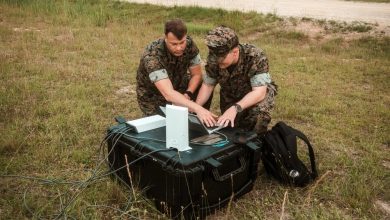
The joint venture combines Thales’ expertise in encrypted networks and voice systems with Kongsberg’s experience in tactical radios and battlefield communication networks, including those used for the Norwegian Advanced Surface-to-Air Missile System.
Moreover, the new company is set to employ approximately 350 people in Norway, with locations in Oslo, Trondheim, and Asker.
“Together, we can develop and sustain a broader and stronger product portfolio and domain expertise to create a solid partner for the Norwegian customer, while also gaining access to better market channels internationally, particularly with the support of Thales’ global distribution network,” said Eirik Lie, President of Kongsberg Defence & Aerospace.
Thales Executive VP of Secure Communications & Information Systems Christophe Salomon added that the joint venture will enhance cooperation between the two companies and allow them to capitalize on their combined strengths. This, he said, creates “a new key player in secure communications that supports bilateral cooperation between Norway and France.”
In 2024, the two defense firms had combined revenues of 1.5 billion Norwegian kronor ($148 million), with projections to reach 3 billion kronor ($297 million) by 2030 through the joint venture, driven by growing demand and product integration opportunities.
Norway Boosts Security
Norway is intensifying its efforts to enhance national security amid regional tensions.
Earlier this year, Norwegian intelligence warned that Russia is “likely” to carry out sabotage operations, possibly targeting energy infrastructure or military aid destined for Ukraine.
In January, Norway proposed reintroducing mandatory construction of air raid shelters in new buildings in case of conflict, returning to a Cold War-era policy.
The move is part of a broader national security plan that includes expanding the civilian defense force and improving cybersecurity efforts.