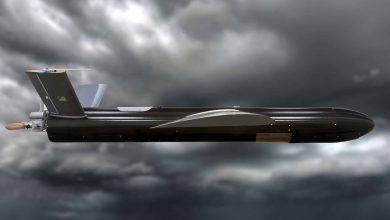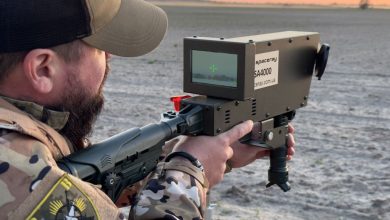
The UK Ministry of Defence (MoD) has selected Estonian firm Threod Systems’ launcher for the British Army’s emerging one-way effector capability under the Asgard program.
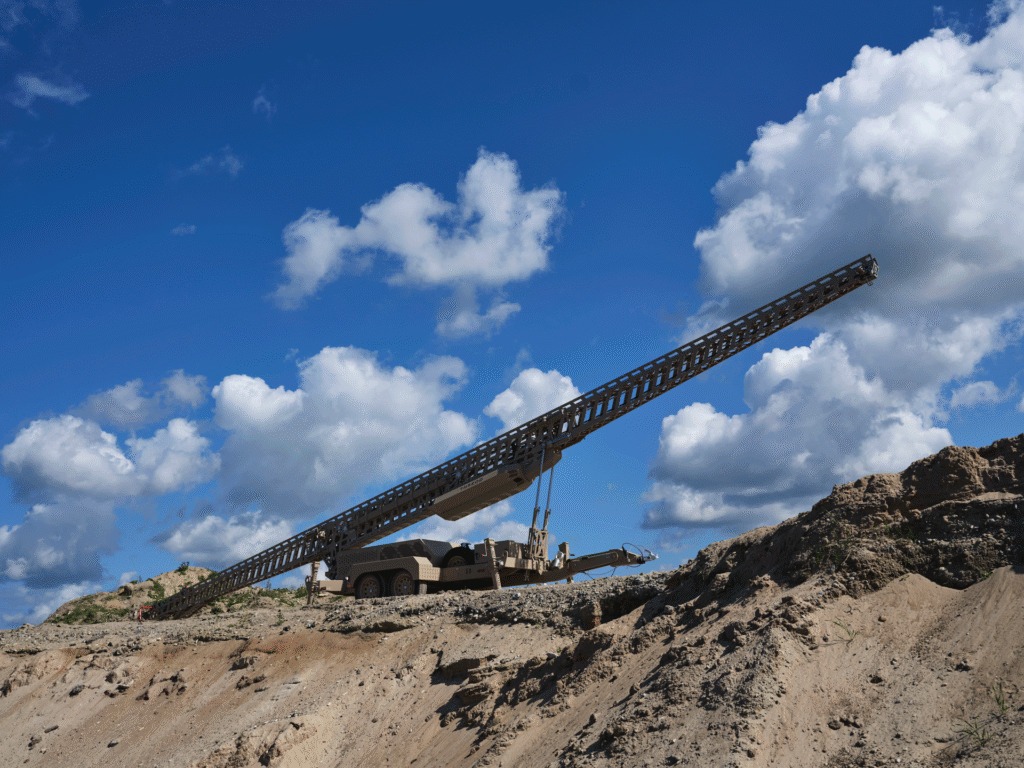
The Cata aircraft launcher was the only system found capable of supporting both Asgard and other one-way effector projects across the British Armed Forces.
Asgard is a British Army initiative aimed at accelerating the targeting process over the next nine to ten years through artificial intelligence and secure communications.
During trials conducted throughout 2025, the pneumatic aircraft launcher demonstrated operational suitability and interoperability with other British Army one-way effector platforms. It has also been requested by additional MoD units for future one-way effector trials.
Delivery in First Quarter
Following the decision, a 5-million-pound ($6.67 million) contract is being prepared between the parties, with the first delivery expected in the first quarter of 2026.
“Launcher systems are critical components in the development of one-way effector capabilities for European armed forces,” Threod Systems CEO Arno Vaik said.
“The trials carried out with the British Army Trials Unit demonstrated how Threod’s simple and reliable launcher architecture can provide operators with the capability to deploy multiple one-way effector drones using a single launcher system.
We are pleased that the Cata launcher will now support the British Army and strengthen our cooperation with UK defence partners.”
Cata Aircraft Launcher
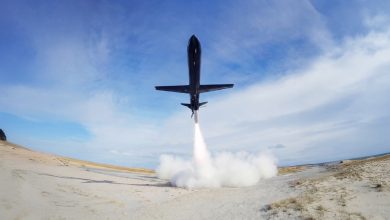
Threod’s Cata system delivers launch speeds of up to 55 meters (180 feet) per second for one-way effectors weighing between 110 pounds (50 kilograms) and 882 pounds (400 kilograms).
Using platform-specific adapters, it can deploy different unmanned aerial system types from the same launcher for greater flexibility and cost efficiency.
Deployment, reload, and extraction take under three minutes, with just two operators trained within a week. Most functions are handled via remote control, minimizing on-site manual work.
The system offers a mean time between failures of around 500 launches, supported by built-in monitoring that provides continuous status updates and maintenance alerts.
Mounted on an off-road trailer with an adjustable towbar, it is compatible with a wide range of vehicles and has a maximum road speed of 90 kilometers (56 miles) per hour.