Russian combat aviation dropped at least 5,717 air-delivered bombs on Ukrainian territory in January 2026, marking the highest monthly total recorded since the start of the war, according to monitoring data cited by the Oko Gora + News and Analytics Telegram channel.
The figure represents a 26 percent increase compared with December 2025, when Russian aircraft reportedly released fewer than 4,600 bombs.
Based on the January tally, Russian forces averaged approximately 184 air bombs per day throughout the month.
Previous monthly peaks were observed in October 2025, with 5,328 bombs, and April 2025, with 5,272. January’s total surpasses both, suggesting a sustained escalation rather than a short-term surge.
Shift Toward Stand-Off and Precision-Guided Weapons
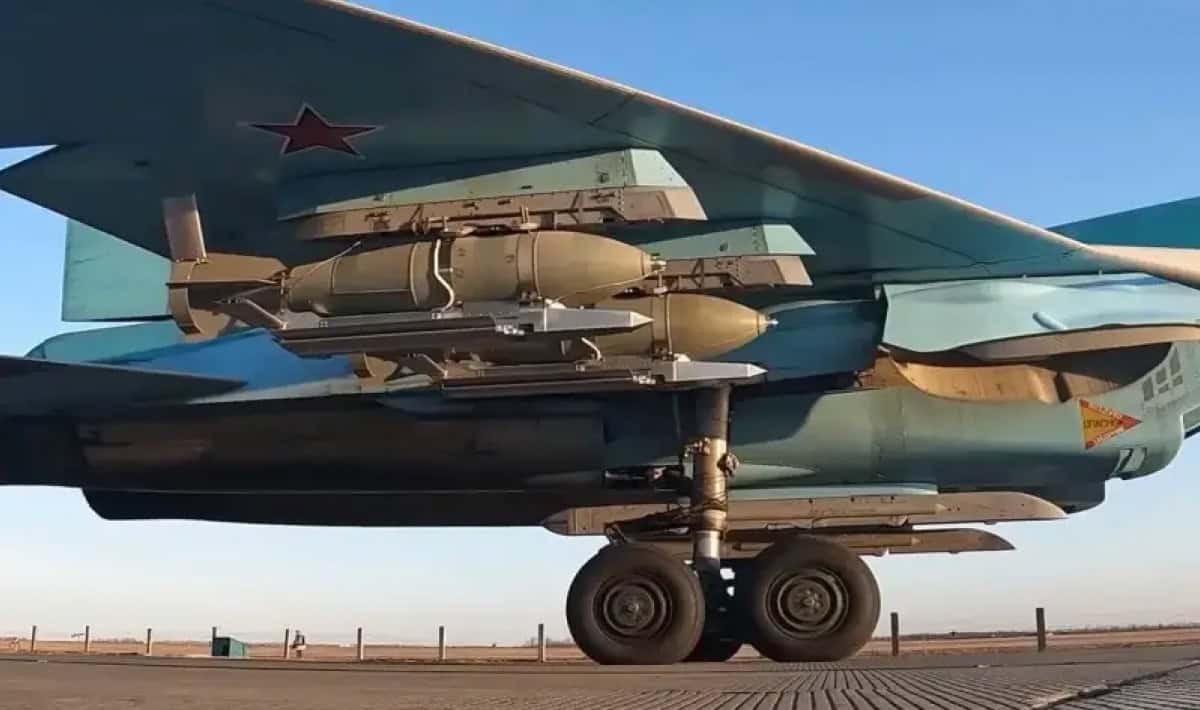
Analysts tracking Russian air operations note that the increase is closely linked to the expanded use of guided aerial bombs, particularly those equipped with glide kits or propulsion systems that allow launches from beyond the reach of many Ukrainian air defense systems.
Since mid-2023, Russia has increasingly relied on modified Soviet-era free-fall bombs fitted with Unified Gliding and Correction Modules (UMPK), enabling them to strike targets dozens of kilometers from the release point.
These weapons have been used extensively against frontline positions and urban areas near the combat zone.
In late October 2025, Russian forces reportedly employed jet-powered guided bombs, often referred to as UMPK or Grom-type munitions, in an attack on the city of Kamianske in Ukraine’s Dnipro region.
Monitoring groups recorded at least three fast-moving, jet-propelled bombs approaching the city, followed by explosions and visible smoke plumes.
Kamianske lies more than 120 kilometers (932 miles) from the front line, placing it beyond the typical range of earlier glide bomb attacks.
Ukrainian officials did not immediately provide detailed damage assessments, but the incident was notable due to the distance from active ground fighting.
Military analysts say the broader trend reflects Russia’s efforts to compensate for limitations in tactical aviation over contested airspace, using stand-off munitions to maintain pressure on Ukrainian defenses, infrastructure, and logistics nodes while reducing aircraft exposure to air defense fire.