Hanwha’s American Gambit: Korean Artillery Ammunition, Made in USA
South Korea’s Hanwha brings automated ammunition production to America.

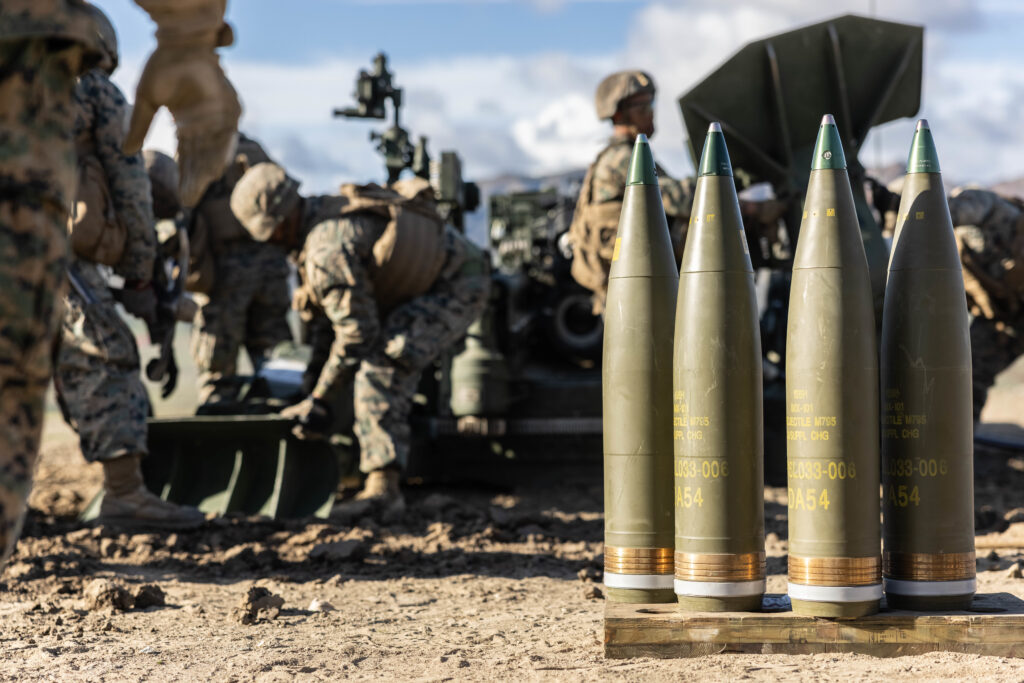
The numbers sound almost impossible: 1.2 million units of modular charge systems (MCS) — a volume sufficient to support approximately 200 to 250,000 rounds of 155mm artillery ammunition. Another quarter-million rounds annually from a second “smart factory” under construction.
All of it flowing from facilities where robotic systems blend nitrocellulose and nitroglycerin with precision measured in fractions of a gram, where operators in white coats monitor screens from climate-controlled rooms, and where any propellant charge that deviates even slightly from specifications is automatically rejected before human hands ever touch it.
This is modern defense manufacturing at scale — the kind of high-volume, highly automated production capacity that the United States is scrambling to rebuild as the war in Ukraine burns through artillery ammunition faster than Western allies can produce it.
And it’s happening not in America, but in South Korea, at facilities built by Hanwha Aerospace that now dominate more than 90 percent of their home country’s warhead and propulsion system market.
But here’s the twist that captures a profound reversal in the global defense manufacturing landscape: the same South Korean company that benefited from American technology transfers in the 1970s, when Korea was racing to build its defense industrial base amid Cold War tensions, is now preparing to build a state-of-the-art ammunition plant on American soil, filling critical gaps in the US military’s own supply chains.
“We are upgrading our US presence,” said Lee Woo Jin, head of Hanwha Aerospace’s Yeosu plant, during an exclusive interview in November.
“The modular charge system will be our stepping stone for the US market.”
The announcement was made during this reporter’s visit to two of Hanwha’s sprawling production facilities south of Seoul, marks a historic shift: a South Korean defense contractor preparing to manufacture artillery ammunition domestically in the United States.
The location is expected to be announced in the coming months. But the timeline is aggressive: environmental permit submissions, construction beginning shortly after, and full-scale production of Modular Artillery Charge System (MACS) rounds by 2029.
By 2030, Hanwha aims to produce fully US-localized modular charges using American-made raw materials. It’s an audacious plan born of urgent necessity.
In the meantime, the US Army has been modernizing its own munitions production, recently awarding a landmark lease at Pine Bluff Arsenal to Hanwha Defense USA to build a $1.3 billion facility producing critical artillery materials.

As Ukraine burns through hundreds of thousands of 155mm artillery rounds in its grinding war with Russia, and as the US Army scrambles to replenish stockpiles depleted by aid to Kyiv, the limitations of America’s own defense industrial base have been laid bare.
The US currently relies on just two contractors — General Dynamics Ordnance and Tactical Systems and American Ordnance — to produce MACS, and both struggle to meet surging demand.
Enter Hanwha, a South Korean conglomerate that dominates more than 90 percent of its home country’s warhead and propulsion system market and has spent the past two years quietly positioning itself to become a major player in the American defense ecosystem.
The Birthplace of Korean Missiles
The journey began at the Daejeon plant, often described as the birthplace of South Korea’s missile systems.
Originally built and operated by the state-run Agency for Defense Development (ADD), Hanwha acquired the production lines in 1987.
Since then, the facility has been expanded and modernized across a 300-acre site. Adjacent to the ADD complex, Daejeon sprawls across the landscape with the intentional dispersion of a facility designed for hazardous work.
Key areas include dedicated warhead integration lines, guided-weapon assembly areas, and extensive underground ammunition storage built to the highest safety standards, one of very few such facilities worldwide.
Jae Woong Ga, Senior Vice President and plant manager at Daejeon, explained the site’s complete vertical integration during the tour.
“Hanwha is capable of producing energetic materials all the way to system integration,” he said. “We manage all components required for missile system integration, including rocket motors, guidance systems, and warheads.”
This end-to-end capability from raw material processing through casting, curing, non-destructive testing, final assembly, and system-level validation is what sets Hanwha apart in global defense markets.
It’s also what makes the company so valuable to American military planners looking to de-risk supply chains that have grown dangerously fragmented.
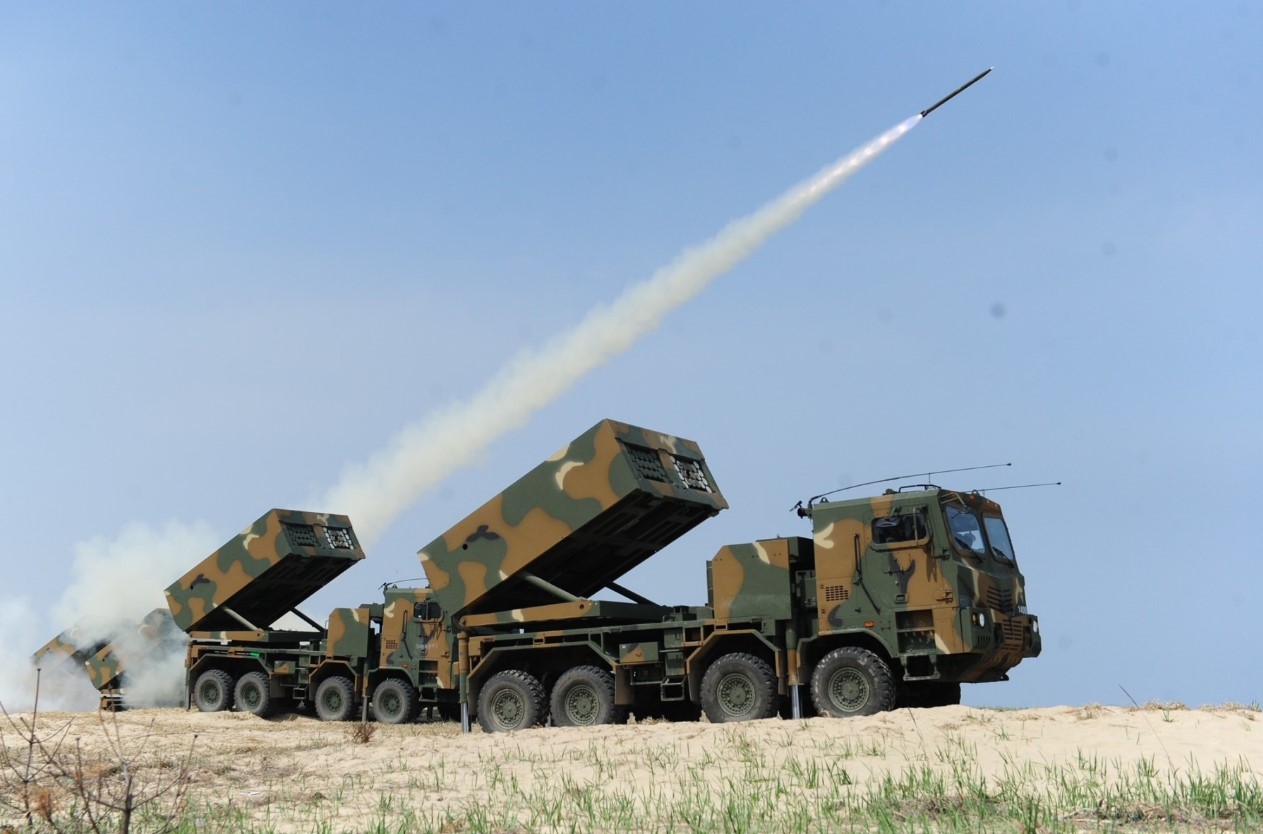
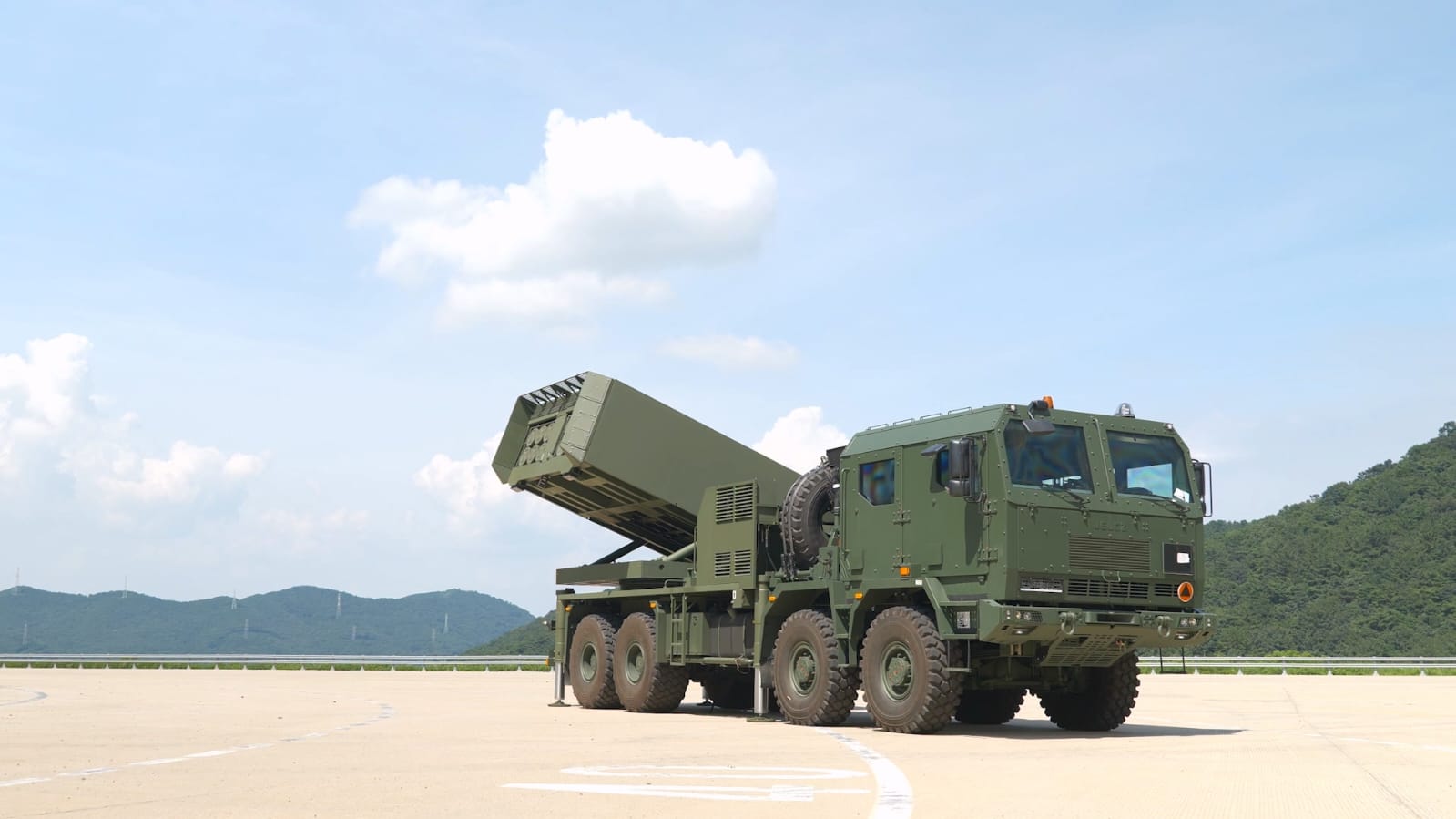
The Daejeon plant produces Korea’s Chunmoo multiple rocket launcher system, which has been supplied to the Republic of Korea military for over a decade and exported to customers in Europe and the Middle East.
When Poland requested a range extension from 80 to 290 kilometers, Hanwha completed development within a year and moved immediately into mass production, the kind of agility that US defense officials can only dream of in their own acquisition processes.
“We completed development within a year and we are now mass producing that item,” Ga said, illustrating the speed of Korean defense manufacturing. “Typically, we finish R&D within a year and move to mass production right away.”
The facility also produces the TAipers anti-tank guided missile, tactical ground-based guided weapons designed to defeat enemy artillery and fortified targets, and rocket motors for Korea’s air-defense systems.
Mass production of rocket motors for long-range air defense is set to begin shortly.
Beyond defense, Hanwha Aerospace plays a critical role in Korea’s space program, having developed and produced key separation motors and pyro-starters for the KSLV launch vehicle. But it’s the less glamorous world of artillery ammunition where Hanwha sees its biggest American opportunity.
Inside the Arsenal: Yeosu’s Vertical Integration
The Yeosu plant, specializing in propelling charges, high explosives, and pyrotechnics, is where Hanwha’s vision of American production will be replicated.
This facility has been the backbone of South Korea’s artillery ammunition supply for decades, and a tour of its production lines reveals why the company believes it can succeed where American manufacturers have struggled.
“This is the only location in South Korea that produces these sorts of explosives and modular charges for artillery,” Lee emphasized. “We’ve been producing about 200,000 rounds annually for over 20 years now. We have that experience. That is a big strength of ours.”
The numbers are staggering for those unfamiliar with South Korea’s defense industrial capacity.
The Yeosu plant currently produces propelling charges sufficient to support approximately 200,000 rounds per year and when Koreans say “rounds,” they’re referring to complete containers of modular charges, not individual modules.
With ongoing investments, that figure will increase to 250,000 rounds per year within three years.
Separately, Hanwha is constructing a new smart factory at its Boeun site with comparable annual capacity of about 250,000 rounds, set to begin operations in early to mid-2027.
That would effectively double Hanwha’s export-ready modular charge system capacity to roughly half a million rounds annually, more than the entire current US production capacity.
The production chain at Yeosu is fully integrated, from raw materials to final products, resulting in what Lee called “high efficiency and production flexibility.” Teams manufacture nitrocellulose and nitroglycerin, dry the nitroguanidine from Europe, and transform them into propellants, and combustible cartridge cases (CCC), then assemble them into complete modular charge system units.
“Because of this vertical integration, we maintained uninterrupted production even during COVID-19,” Lee noted, a pointed contrast to the supply chain disruptions that plagued Western defense contractors during the pandemic.
The automation level varies by process.
Nitroglycerin, nitrocellulose, and nitroguanidine production all operate through fully automated plant-scale industrial processes, fundamentally controlled by automated systems. The propellant manufacturing process involves a limited number of operators, with automation continuously increasing.
The final load, assemble, and pack processes operate at very high automation levels. “For ballistic performance, the most critical factor, especially in mass production, is maintaining extremely tight tolerances in propellant weight,” Lee explained.
“Our automated weighing system controls propellant quantity with very high precision, and any unit outside the specified tolerance is automatically rejected for quality control. This weight-control automation is what ensures consistent and reliable ballistic performance across all production lots.”
It’s this combination of vertical integration, automation, and proven mass production expertise that Hanwha plans to transplant to American soil.
The American Gambit
The US localization roadmap is ambitious in scope and timeline. According to Lee, Hanwha plans to bring nearly everything seen at the Korean facilities to America, with the possible exception of RDX processing line, which remains to be determined based on US requirements.
The development follows a staged approach, with initial capabilities focused on core energetic materials and propellant production, and further expansion planned through 2028 to support broader production capacity over time.
By 2030, the goal is to produce fully US-localized modular charges using American-made raw materials.
“We already have experience producing multiple modular charge variants, and MACS shares the same core architecture,” Lee said.
The design process for the smart factory concept began about 18 months ago, based on Hanwha’s new Boeun facility. Building construction has already started at Boeun, with equipment installation beginning in the first half of next year. But Lee was careful to note that the US facility won’t be a carbon copy.
“The concept will be the same, but major modifications are required due to ATF, EPA, and OSHA regulations, US quantity-distance requirements, and the US customary unit system versus SI units,” he explained.
“To avoid delays, we already have US-based engineers involved in the design process, and we expect to begin environmental permit submissions in January.”
When asked about the approval process, Lee clarified that this isn’t a government-funded initiative in the current stage requiring the usual Defense Department acquisition bureaucracy.
“Our current plan is to privately fund the establishment of this US plant. But we will still be able to make adjustments to business circumstances,” he said.
Hanwha’s challenge is timing: the US plant isn’t built yet, and production won’t begin until early 2029, but the company is anticipating that the army’s desperate need for ammunition production capacity will create opportunity for a new entrant with proven capabilities.
But Lee believes the Korean approach offers distinct advantages: “We bring a fully automated production line with no direct operator-energetics contact, vertical integration from precursors to final modular charge systems, and a domestic US source of triple-base propellant,” he said.
Supply Chain Sovereignty
One critical question for any foreign defense contractor setting up in the US is supply chain vulnerability.
For the US facility, the goal is eventual complete localization. The phased approach allows production to begin with some Korean-sourced materials while domestic supply chains are established, a pragmatic compromise between speed to market and supply chain independence.
The broader strategic question is where the biggest vulnerabilities lie in US and NATO ammunition supply chains, and how Hanwha is uniquely positioned to fill those gaps.
“Hanwha’s core strength is that we produce every part of the MCS value chain — precursors, energetics, propellant, CCC, and final loading — within a single integrated site,” Lee said. “This reduces fragmentation, supply gaps, and production misalignment.”
He contrasted this with the typical Western model: “In the US and Europe, ammunition production is typically fragmented across multiple companies and locations, which complicates scaling and synchronizing production. Hanwha’s vertically integrated model avoids this problem and delivers highly consistent, high-volume output.”
For over 20 years, Hanwha has been the sole supplier of modular charges to the Republic of Korea Army, building an ecosystem of suppliers, engineering processes, and mass-production expertise that creates a highly stable industrial base, exactly what the US defense establishment is trying to rebuild after decades of defense industrial consolidation and offshoring.
Beyond Ammunition: A Broader Vision
While modular artillery charges are the immediate focus, both Lee and Ga made clear that Hanwha’s American ambitions extend far beyond ammunition.
“We intend to use this opportunity as a stepping stone for future growth, if possible, to join the precision guided munition and extended range artillery as well,” Lee said.
At Daejeon, Ga outlined potential areas for rapid alignment with US modernization programs. “If the US Army proceeds with a 52-caliber self-propelled howitzer program, Hanwha is ready to onshore relevant munitions for that platform,” he said.
The company is also ready to support missile systems and their components where the US faces long lead-time constraints.
This broader vision positions Hanwha not just as a supplementary surge provider but as what Lee called “a strategic co-production partner” and “a fully embedded long-term supplier” in the US defense ecosystem.
“We envision becoming a US defense prime, but at the same time, this plant envisions to become a strategic partner of the United States Command as a strategic production location for INDOPACOM needs,” Lee said.
Scaling for Global Demand
A recurring question during the facility tours was production capacity. With simultaneous demand from Korea (which supplies 90 percent of its own market), Europe (particularly Poland and other NATO members), and potentially the US, how quickly can these plants scale output?
Ga’s answer revealed something fundamental about South Korea’s defense industrial model.
“Because Korea is technically a country still at war, although luckily there has been no active conflict, that’s one of the reasons why we are ready to produce whichever items at whichever capacity that is needed,” he said.
“We do have a lot of orders from different parts of the world, not just the South Korean government, but we still have more capacity to produce whichever the customer requires,” he continued.
The speed depends on specifications, but the Chunmoo example, developing the 290-kilometer range extension for Poland within a year and moving immediately to mass production, illustrates Korean defense manufacturing agility.
The buffering strategy involves more than just adding equipment at existing facilities.
“We’ve been constantly increasing our production capacity,” Ga explained. “Not just by adding a couple of additional equipment here in Daejeon, but we’re utilizing the Boeun plant, which has more land, and over the past five years that Boeun plant has been acquiring almost all capabilities that Daejeon plant has.”
This replication strategy, building parallel production ecosystems rather than just expanding single facilities, provides both surge capacity and resilience. It’s also the model Hanwha will follow in the US, starting with one facility but with clear potential for expansion.
Hanwha has also worked to secure domestic sources for critical equipment. “We have capabilities of sourcing our own equipment,” Ga said. “We have reliable domestic suppliers for major equipment such as propellant loading equipment and NDT equipment, so that we don’t depend on equipment from overseas.”
This focus on supply chain sovereignty at every level, from raw materials to production equipment, reflects hard-learned lessons from a country that has lived under existential threat for seven decades and cannot afford supply chain vulnerabilities.
The plant tours also revealed Hanwha’s ongoing innovation in artillery charge systems.
Lee discussed the company’s next-generation propelling charge, which development began in 2023 and was completed in 2025. The evolution tells the story of Korean defense industry maturation.
Earlier bag charges were based on US-licensed designs. K676 and K677 were independently developed for the 52-caliber K9 self-propelled howitzer. KMCS was developed to meet Joint Ballistics Memorandum of Understanding (JBMOU) and NATO standards and is now exported globally. The next-generation MCS is optimized for the fully automated K9A2, whose ammunition-handling system is completely automated.
“The new charge incorporates upgrades to support automated handling systems, low gun abrasion, and improved performance,” Lee said. “It has been fully qualified by the ROK Army and will soon be fielded alongside the new K9A2 platform.”
An exportable version is currently in development and will be completed next year, based on the Korean Army’s design but upgraded to full JBMOU compliance.
This pattern — develop for domestic needs, then create export variants that meet international standards — has become the Korean defense industry’s playbook, and it’s one Hanwha will follow in the US market as well.
NATO Interoperability
A critical question for any non-NATO manufacturer seeking to supply Western military forces is standards compliance. Korean defense systems are built on MIL-standards closely aligned with NATO requirements, according to Ga.
“For example, the missile system that we just mentioned, the 290-kilometer one, that is a NATO-compliant system,” he said. “Because the Korean defense systems and the NATO standards are not too different — in fact, the Korean system was first built around the NATO and US standards — we have the capabilities of producing a NATO-standard compliant product as fast as we can, and with the collaboration with the customer, we get those products qualified.”
All products at both facilities use MIL-STD requirements and can be adapted to NATO standards depending on customer needs.
“The difference between MIL standards and NATO standards is really mostly in the testing requirements and the number of tests,” Ga explained. “So in terms of capabilities, we have that ready.”
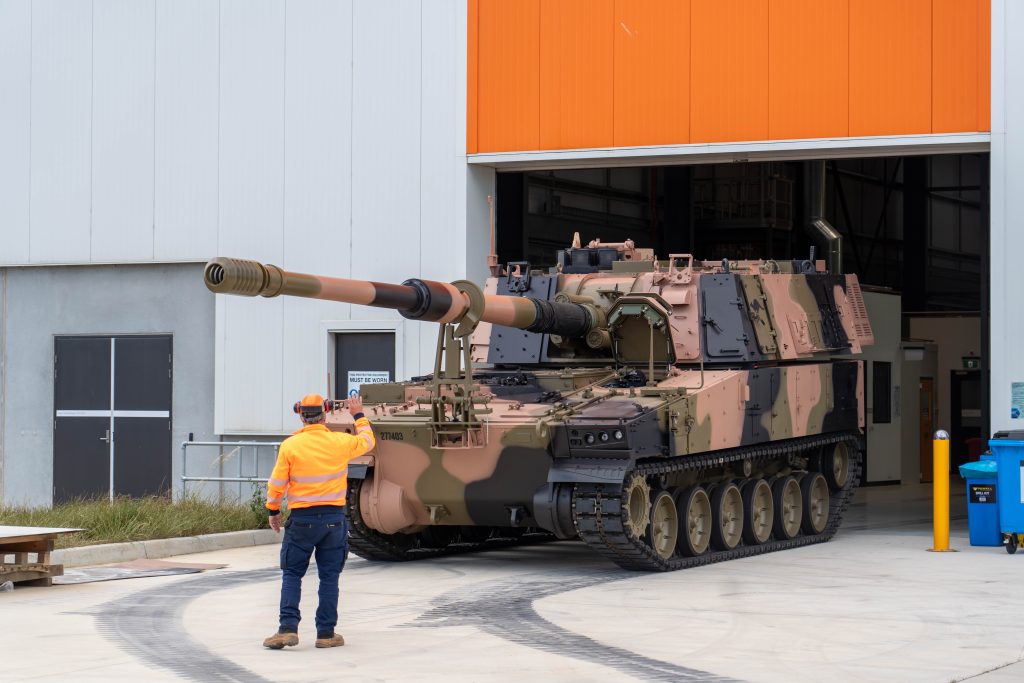
This interoperability is crucial for Hanwha’s broader export strategy. The company already manufactures K9 howitzers in Australia, exports KMCS to the UK, and supplies various components to other Five Eyes customers through Korean production lines.
“The US is the biggest market amongst those Five Eyes countries, and establishing a plant there is we are trying to get our foot in the door into the U.S. market, not Five Eyes per se,” said Ga.
The Korea-US Defense Industrial Partnership
The relationship between US and Korean defense industries has come full circle.
The journey from that first American-supplied propellant mixer in the 1970s to Korean plans for a state-of-the-art ammunition plant on US soil spans not just decades but a fundamental transformation in global defense manufacturing.
During the Cold War, the US provided technology transfers and production licenses to help South Korea build its defense industrial base.
American engineers helped set up facilities like Yeosu, American designs formed the basis for Korea’s early munitions production, and American equipment, like that still-functioning propellant mixer, became the foundation of Korean capabilities.
Now, as the US faces its own defense industrial challenges, Korea is positioned to return the favor. The tables haven’t exactly turned, Hanwha executives were careful to frame their American expansion as partnership rather than displacement, but the dynamic has certainly evolved.
The timing is driven by urgent necessity. The war in Ukraine has exposed critical vulnerabilities in Western ammunition production capacity.
The US Army’s own industrial base has atrophied after decades of consolidation, offshoring, and “just-in-time” manufacturing philosophies that prioritized efficiency over resilience.
As geopolitical strategic competition intensifies, the need for robust, redundant, and scalable defense manufacturing has become a national security imperative.
South Korea, forged by existential threat and sustained by mandatory military readiness, has maintained the kind of defense industrial capacity that the US allowed to wither.
Korean manufacturers think in terms of wartime production requirements, maintain surge capacity as standard practice, and operate under the assumption that they might need to scale rapidly at any moment.
“Hanwha has maintained wartime production readiness for 40 years,” Ga said. “We have enough buffer capacity to absorb additional orders. If requirements are clear, we can typically scale to full delivery within a year.”
This is the capability the US Army desperately needs to rebuild, and Hanwha is offering to build it on American soil with private capital, no government funding required, and a timeline measured in years rather than decades.
Looking Ahead
Hanwha offered a final thought that captured both the ambition and the pragmatism of Hanwha’s American plans.
“We are bringing to the United States a very stable and proven technology,” Lee said. “Over 20 years of experience producing a vertically integrated production line that begins with energetics all the way to the end product of modular charges, minimizing the risks in supply chain and sourcing.”
Whichever state wins the facility will gain not just a factory but a foothold for Korean defense manufacturing in America, with implications that extend far beyond artillery ammunition.
For the US defense establishment, the Hanwha partnership represents both opportunity and reckoning.
Opportunity to rapidly rebuild ammunition production capacity with proven technology and experienced partners, but also a reckoning with the reality that America can no longer assume default superiority in defense manufacturing.
The old American propellant mixer still churning away in the corner of the Yeosu plant stands as a symbol of the partnership’s origins.
The gleaming automated production lines surrounding it represent its future.