New Delhi has approved the Indian Army’s plan to split warfighters into Integrated Battle Groups (IBGs), aimed at making forces faster, more flexible, and better prepared for modern conflict.
Announced by Army Chief Gen. Upendra Dwivedi, the move follows the South Asian government’s clearance of 31 sanction letters for structural reforms over the past 14 to 15 months.
This paves the way for the new units’ creation, as well as the establishment of new aviation brigades and the resumption of the Territorial Army’s reserve personnel recruitment after a five-year gap, according to local media.
The IBG Framework
IBGs are compact, self-contained fighting formations designed to respond quickly in the event of a crisis.
Each IBG will field about 5,000 troops, making it larger than a brigade but smaller than a division, and will be led by a major general.
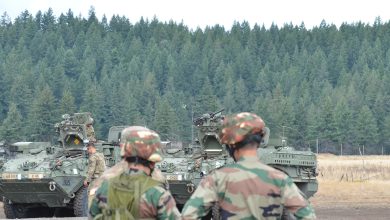
Unlike traditional formations, IBGs combine infantry, tanks, artillery, air defense, engineers, communications, and logistics under one commander, allowing them to move and fight without waiting for reinforcements.
The first IBGs will be raised in strike corps, starting with the 17 Mountain Strike Corps, which is tasked with missions along India’s disputed border with China.
Planners expect the new units to handle operations within 48 hours of receiving orders, a key shift from slower, corps-level mobilization.
Larger Military Overhaul
The IBG rollout comes amid the Indian Army’s wider overhaul to sharpen combat strength while reducing support overhead, a balance that the force frames as critical as equipment modernization.
As part of the restructuring, the service has launched two Rudra all-arms brigades and eyes seven more, along with 25 Bhairav light commando battalions, 15 Shaktimaan artillery regiments, and 34 Divyastra batteries using unmanned aerial systems and precision tools.