What Washington Will Really Ask About a South Korean SSN
An SSN can aid US-ROK undersea strategy but only if Seoul proves it works operationally, politically, and industrially in Washington’s eyes.

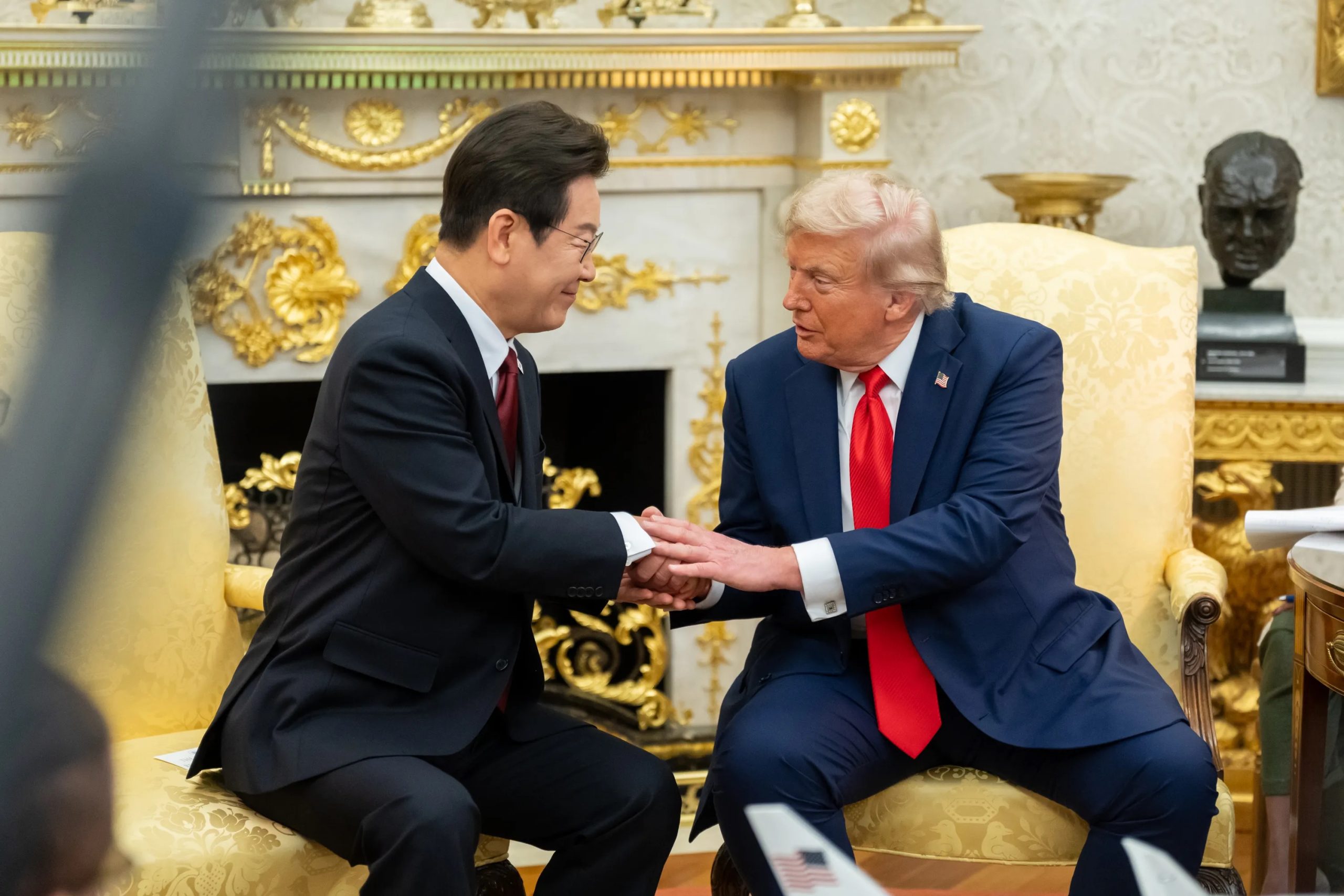
Washington is not skeptical of a South Korean nuclear-powered attack submarine (SSN) because it doubts Korea’s technical competence. It is skeptical because an SSN program solves the wrong problem if it is framed narrowly as a response to North Korea, or worse, as a prestige capability untethered from alliance strategy.
For a ROK SSN to gain traction in US policy circles, it must be justified in Washington’s terms: does it strengthen combined deterrence and warfighting in the Indo-Pacific, align with US operating concepts, and avoid political, legal, and industrial risks that outweigh its benefits?
That framing matters because SSNs sit at the intersection of two pressing American priorities.
The first is preparing for high-end conflict in contested maritime environments, a theme reinforced in recent US Navy guidance emphasizing sustained combat effectiveness under pressure.
The second is scarcity. US SSNs are persistently overstretched, while maintenance backlogs and shipyard capacity constraints limit availability.
Any credible ROK SSN case must therefore demonstrate that a Korean force would ease pressure on US undersea forces — without triggering nonproliferation concerns or exacerbating industrial bottlenecks.
Why Washington Cares
US SSNs conduct intelligence collection, anti-submarine warfare, strike, and sea denial missions, but oversight reporting has repeatedly highlighted the mismatch between demand and supply and the readiness drag caused by maintenance delays.
From a US perspective, the most compelling alliance argument is not symbolic burden-sharing but functional relief.
A ROK SSN force could plausibly assume a defined share of undersea missions in and around the peninsula and adjacent seas, reducing the “theater tax” imposed on US submarines and freeing American SSNs for wider Indo-Pacific requirements.
Washington, however, will not accept this logic as a slogan. It will ask which missions would shift to Korean platforms, at what scale, under what combined command-and-control arrangements, and how this meaningfully alters US options in crisis or conflict.
Absent clear answers, the burden-sharing claim will be treated as aspirational rather than operational.

A Korean SSN in US War Plans
US naval thinking increasingly emphasizes operating in degraded communications and contested sensing environments while dispersing forces and still coordinating effects.
Distributed Maritime Operations reflects this logic. Within that framework, a ROK SSN should be framed not as a prestige platform but as an enabler of combined undersea control.
Its endurance and mobility could support persistent undersea intelligence, surveillance, and reconnaissance, cueing, and — critically — sustained tracking and denial missions that reduce the uncertainty hostile submarines impose on dispersed surface forces and logistics.
Under combined planning, a Korean SSN could contribute to suppressing adversary submarines, providing indications and warning, and expanding maneuver space, while remaining effective under mission-type orders when networks are disrupted.
This is where an SSN adds alliance value: not by mirroring US capabilities, but by absorbing specific, high-demand tasks under stressed conditions.
Why Indo-Pacific Framing Matters
US naval strategy treats the Indo-Pacific as an integrated demand signal encompassing deterrence, sea control, crisis response, and sustained competition across vast geography.
A narrow focus on countering North Korea therefore undersells the strategic case. A stronger pitch shifts emphasis toward maintaining a stable Indo-Pacific maritime order and reinforcing combined deterrence, while still acknowledging Korea-specific threats.
The more a ROK SSN is presented as improving alliance capacity in contested seas beyond a single contingency, the more legible it becomes to Washington.
Framed this way, the program is less about national autonomy and more about strengthening the undersea balance in a region where US forces are stretched thin.
The Tripwires: Nonproliferation, Law, and Politics
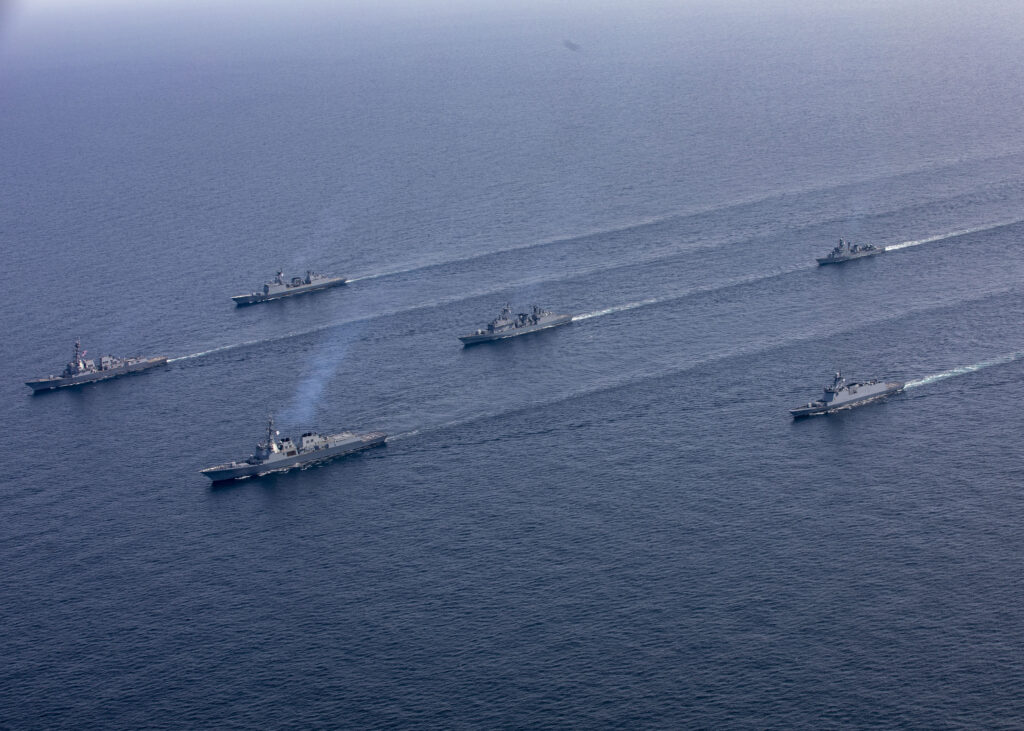
Even a strong operational case can be derailed by nonproliferation and legal concerns.
Naval propulsion raises sensitive questions about fuel supply, safeguards, and precedent under US domestic law and congressional oversight. US skepticism will hinge less on whether Korea can build an SSN and more on whether the program is framed credibly as conventional and alliance-enhancing rather than a step toward nuclear autonomy.
That makes guardrails central. Clear fuel-cycle arrangements, rigorous safety standards, appropriate transparency mechanisms, and consistent messaging that nuclear propulsion is not nuclear armament are not ancillary details; they are prerequisites for political viability in Washington.
The Industrial Reality Check
Submarines are a lifecycle commitment, requiring specialized shipyards, a trained nuclear workforce, and reliable sustainment capacity.
Recent US emphasis on revitalizing the maritime industrial base, often framed through the “Golden Fleet” narrative, signals heightened sensitivity to production and maintenance constraints.
For Seoul, this creates both opportunity and risk. South Korea can position itself as a serious maritime partner, but the United States will resist any SSN pathway that competes with, or further strains, the already stressed US submarine enterprise.
Turning Ambition Into Alliance Utility
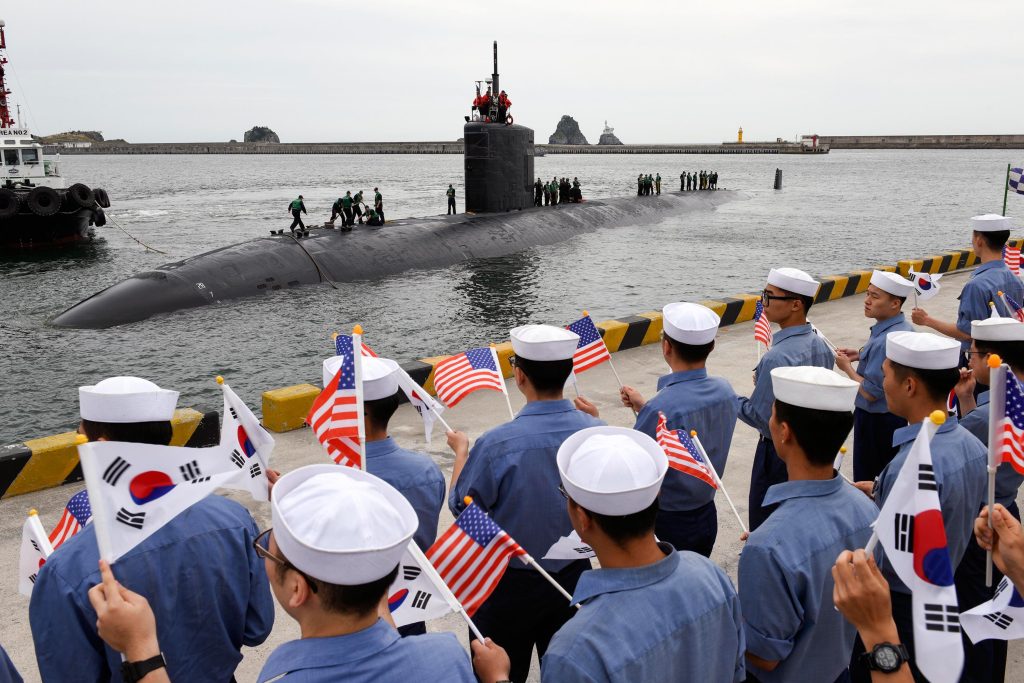
A ROK SSN could plausibly support US naval strategy but only if Seoul answers Washington’s questions on Washington’s terms.
That means operational clarity through defined mission packages aligned with US concepts, governance credibility through robust nonproliferation and legal guardrails, and industrial realism through a sustainment pathway that respects US constraints.
If those conditions are met, the SSN debate becomes more than a national procurement ambition.
It becomes a concrete burden-sharing proposition tied to the alliance’s shared interest in sustaining a stable Indo-Pacific maritime order.
If they are not, Washington’s skepticism will persist — not because the idea is unthinkable, but because it is insufficiently grounded in the hard realities of undersea warfare, politics, and capacity.

Jihoon Yu is the director of external cooperation and associate research fellow at the Korea Institute for Defense Analyses.
Jihoon was a member of the Task Force for South Korea’s light aircraft carrier project and the Jangbogo-III submarine project.
He is the main author of the ROK Navy’s Navy Vision 2045.
His area of expertise includes the ROK-US alliance, the ROK-Europe security cooperation, inter-Korean relations, national security, maritime security, hybrid threats, and strategic weapons systems.
He earned his MA in National Security Affairs from the US Naval Postgraduate School and Ph.D. in Political Science from Syracuse University.
The views and opinions expressed here are those of the author and do not necessarily reflect the editorial position of The Defense Post.
The Defense Post aims to publish a wide range of high-quality opinion and analysis from a diverse array of people – do you want to send us yours? Click here to submit an op-ed.