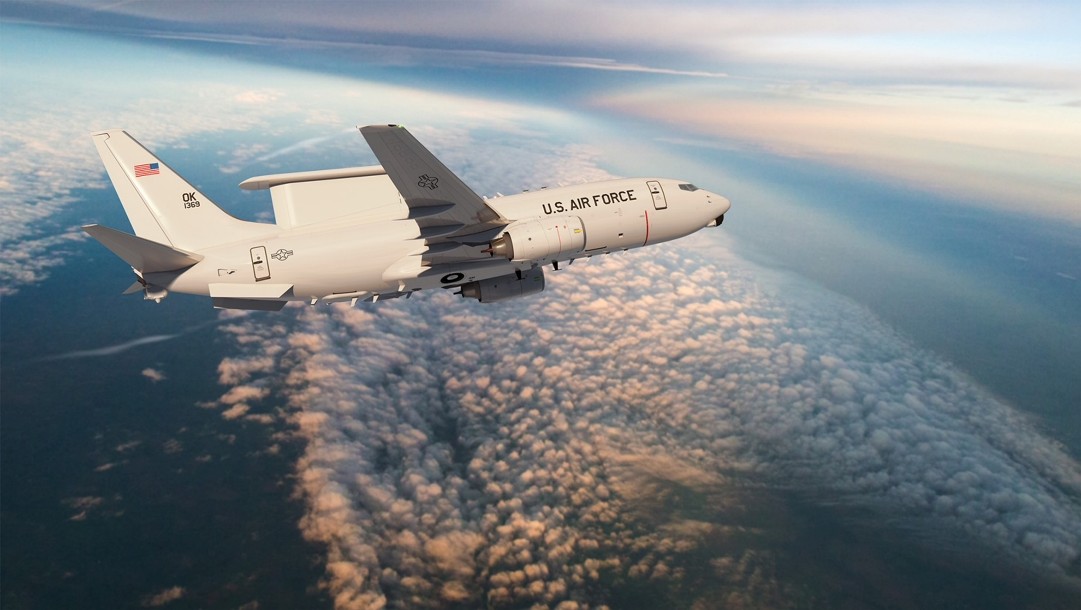
The Netherlands and an unspecified number of European NATO partner countries have scrapped their plan to procure six Boeing E-7 Wedgetail airborne warning and control systems (AWACS).
The procurement was part of an eight-nation effort, including the US, to field successors to the aging and noisy Boeing E-3As ahead of their 2035 retirement.
According to the Dutch Ministry of Defence, Washington’s withdrawal from the program in July prompted significant changes that ultimately led to the decision.
“Under the previous program, both the strategic and financial foundations were lost,” the ministry stated in a press release.
“Therefore, the remaining countries, united in the Support Partnership Committee, halted the acquisition of the E-7.”
US Pullout
The US pulled out of the program amid escalating costs and survivability issues, shifting its focus toward space-based systems that can help warplanes detect and track enemy aircraft.
Another reason for choosing an orbital solution is the ability to provide global coverage, rather than being limited to a specific theater.
“If we want to go there, we have to make a large investment in space-based sensing, which also supports Golden Dome. It covers homeland defense, It covers the Indo-Pacific, which is our priority theater, and also services the globe,” Breaking Defense quoted a senior US military official as saying.
“So that investment [in Wedgetail] was pushed that way [to space-based sensors]. We are bullish on space, and we think that’s a capability that can be achieved actually faster than the E-7 will deliver at this point.”
The capability is not expected to be available until the early 2030s. Until then, the Northrop Grumman E-2D Hawkeye uncrewed tactical airborne early warning aircraft is a possible supplement to the 16 Boeing E-3 Sentries, which have been in service since the late 1970s.
Europe’s Preference for Domestic Solution
The Netherlands was part of a seven-nation partnership for the AWACS replacement program, which also included Belgium, Germany, Luxembourg, Norway, Romania, and the US.
It is not yet known which other countries, beyond the Netherlands and the US, have pulled out of the program.
Meanwhile, the countries that have withdrawn from the program are now exploring alternative solutions and potential new partners, with a particular focus on European platforms.
“The goal remains to have other, quieter aircraft operational by 2035,” State Secretary for Defence of the Netherlands Gijs Tuinman said.
“The US withdrawal also demonstrates the importance of investing as much as possible in European industry.”
Among the potential replacements is Saab’s GlobalEye, based on the Bombardier Global 6000/6500 long-range business jet airframe, which France has already designated to succeed its E-3F Sentry fleet.
Sweden has placed orders for two GlobalEyes, plus two options, while Saab has approached Denmark and Finland with a proposal for potential joint use of the aircraft.