Indonesia Retires Russian APCs, Deploys Czech Pandurs to UN Mission in Lebanon

Indonesia has swapped its aging Russian-made BTR-80A armored personnel carriers with Czech Pandur II 8×8 vehicles in Lebanon under a UN peacekeeping mission.
The older fleet includes 12 BTR-80As operated by the Indonesian Marine Corps, which were recently returned home after 16 years of being stationed in the Middle East.
They are now stored at the 1st Marine Cavalry Regiment base in Jakarta, though their future remains uncertain amid reports they may be decommissioned or transferred to another country, according to United24, citing local Indonesian sources.
Indonesia first acquired the BTR-80As in 2000, with a second batch of 20 vehicles planned that was later dropped in favor of producing the local APS-3 Anoa 6×6 model.
The BTR-80A, which entered Russian service in the mid-1990s, is equipped with a 30-millimeter automatic cannon and a 7.62-millimeter machine gun mounted on a reengineered turret.
This model later influenced the design of Moscow’s more advanced BTR-82A.
Meanwhile, Jakarta’s order for Czech Pandur II vehicles was first publicized in 2020, involving 23 units supplied by Excalibur Army, part of the Czechoslovak Group holding company.
The vehicle kits, manufactured by Excalibur’s sister firm TATRA Defence Vehicle, were shipped to the Southeast Asian country’s state-owned defense firm PT Pindad for final assembly.
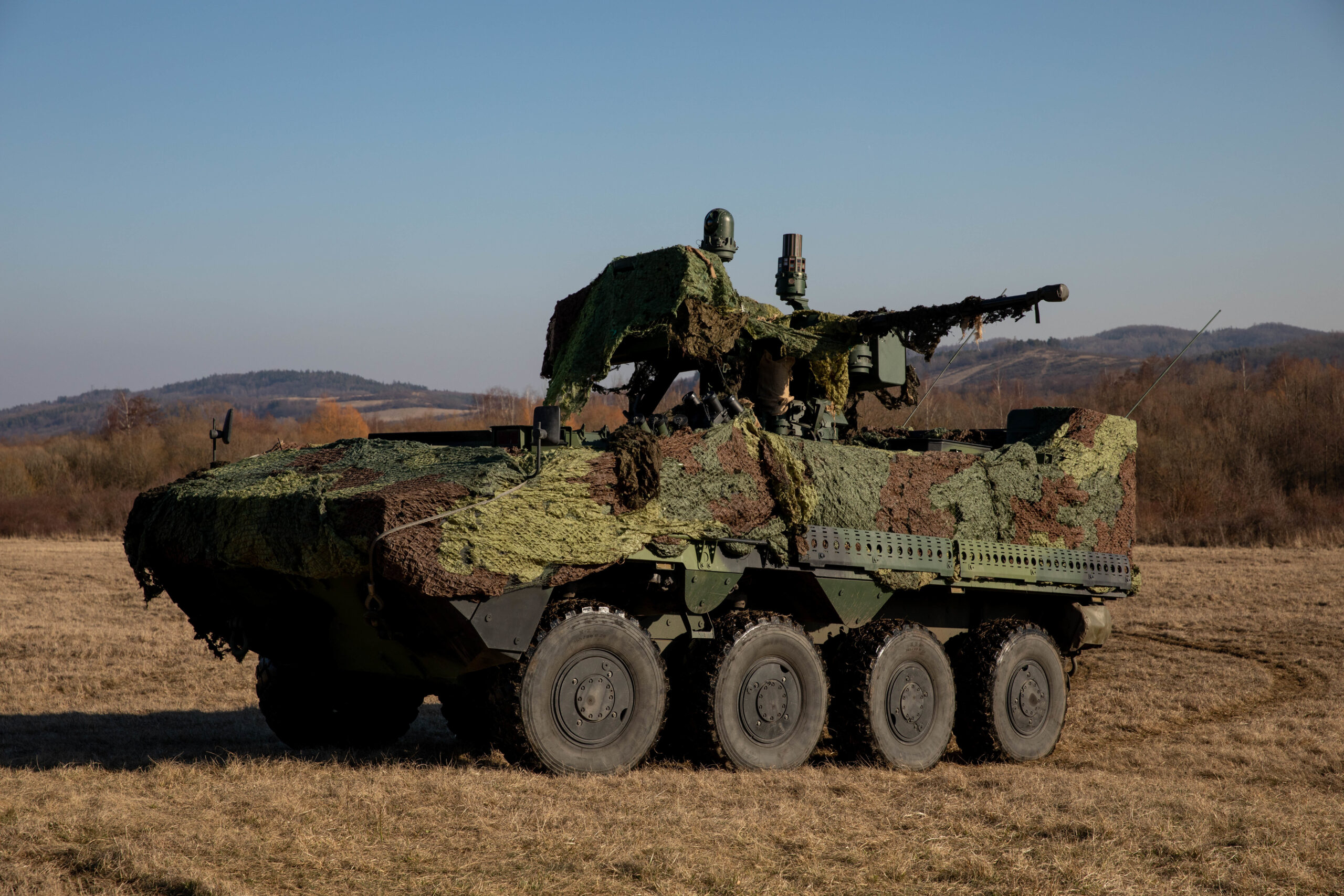
The Czech Pandur
The Pandur II measures 7 meters (24 feet) and has a seating capacity for up to 12 people.
Similar to the BTR-80A, it uses a 30-millimeter cannon and a 7.62-millimeter gun as its main armament. It can also be equipped with a 105-millimeter high-pressure gun, a 12.7-millimeter heavy machine gun, or anti-tank guided missiles.
The vehicle is fitted with a six-cylinder liquid-cooled diesel engine with an output of 455 horsepower for a top speed of 100 kilometers (62 miles) per hour and a range of 700 kilometers (435 miles).