The US Space Force is preparing to field two new ground-based systems designed to jam Chinese and Russian spy satellites, expanding the Pentagon’s ability to disrupt enemy surveillance in space.
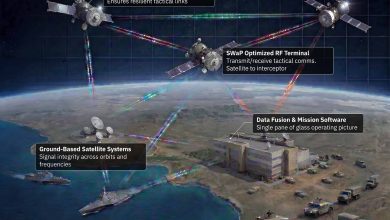
Called Meadowlands and the Remote Modular Terminal (RMT), the systems will join the older Counter Communications System, which became operational in 2020 to “dominate the electromagnetic spectrum” during conflict.
Unlike the larger system, the new jammers are smaller, more mobile, and can be controlled remotely from anywhere in the world.
The Meadowlands, developed by L3Harris Technologies, faced years of technical setbacks but is now undergoing final training and live-fire testing, with the Space Operations Command expecting it to be fielded within the current fiscal year.
Meanwhile, the RMT, developed under a 2022 contract with Northstrat and CACI International, is already being deployed overseas in undisclosed locations and is in an “early-use phase,” allowing it to be used even while testing is in progress, according to Bloomberg.
The outlet previously reported that Washington plans to buy up to 32 Meadowlands units and 24 RMTs.
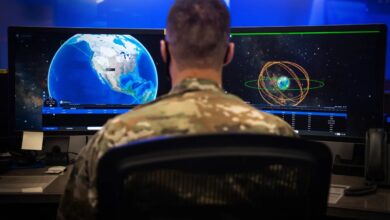
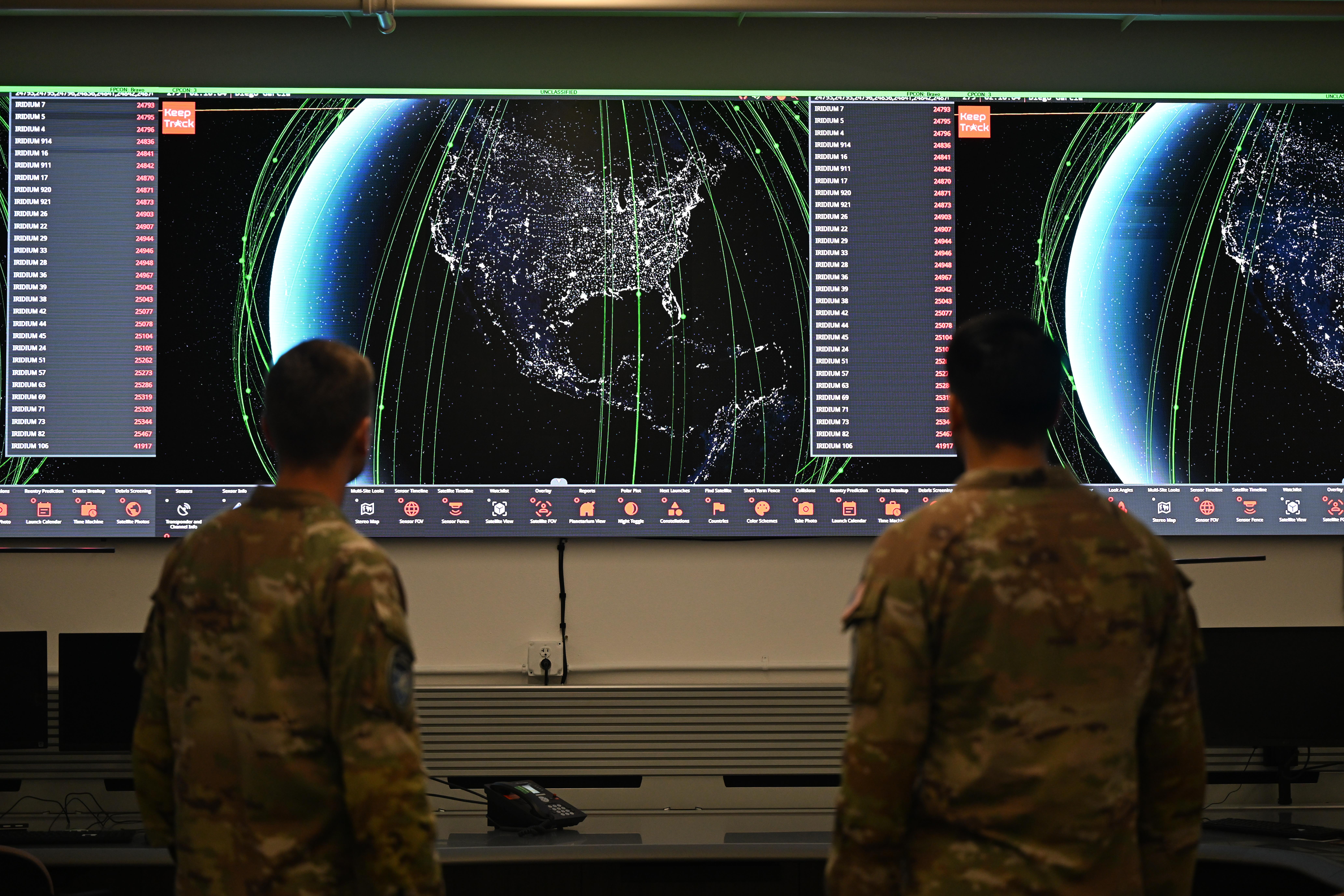
To coordinate global operations, the space force will establish a Space Electromagnetic Tactical Operations Center, which will manage jamming and enemy interference tracking tasks.
It will leverage a monitoring network called Bounty Hunter, used to detect signal disruptions against US satellites. The system was first sent to US Indo-Pacific Command in 2018 and later to the US Central Command in 2019.
China’s Expanding Space Surveillance
An unclassified Space Threat Fact Sheet from the US Department of Defense updated last month said that China now has approximately 1,200 satellites in orbit, including more than 510 used by the People’s Liberation Army for intelligence, surveillance, and reconnaissance.
These satellites help Beijing track American military movements such as aircraft carriers and expeditionary forces.
Gen. Bradley Chance Saltzman, the US Space Force’s top officer, told US lawmakers earlier this year that China’s growing space presence poses “a powerful destabilizing force to our economy and our national security.”
He added that the East Asian country increasingly treats space as a warfighting domain and regularly practices radio signal jamming of communications, radar, and GPS systems during military drills.
Defensive Focus, Not Destruction
The US Space Force clarified that the new systems will not destroy satellites but rather serve as defensive tools meant to block or interfere with hostile surveillance, unlike Moscow’s alleged nuclear-based weapon capable of producing high-altitude electromagnetic pulses to disable satellites and communications networks.
Victoria Samson, director for space security and stability at the Colorado-based nonprofit group Secure World Foundation, verified that there are three “openly acknowledged offensive counter-space systems the US has fielded to date,” Bloomberg reported.
She added that the platforms “respond to an immediate military need but using them isn’t perceived as having crossed a red line or means that there will be active conflict in space. And price-wise, they are far more affordable than space-based jammers.”