Ukrainian Defense Industry has signed an agreement with US firm LeVanta Tech to jointly develop a drone capable of both flying and operating on water.
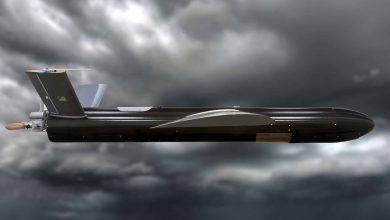
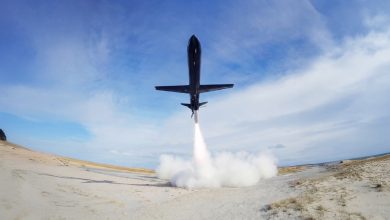
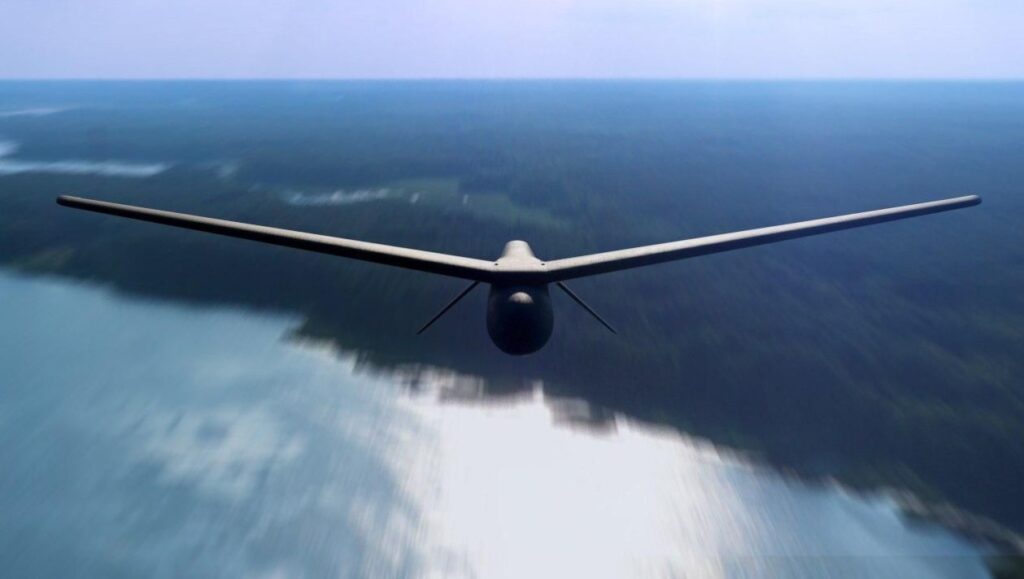
The partnership will build on LeVanta’s Halia sea-launched aerial drone, unveiled in 2023.
The concept aims to combine the long endurance of marine drones with the speed, agility, and low observability of unmanned aerial vehicles.
Unlike seaplane-type drones, it can also take off from and land on rough seas, according to the US firm.
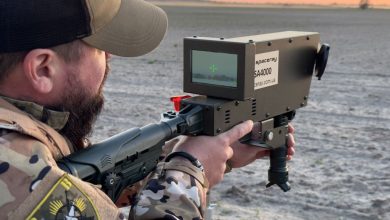
LeVanta Tech plans to conduct joint research and development with Ukrainian engineers, with testing to take place in Ukraine.
The company is also considering expanding production facilities to the country.
“There are many drones that fly, and there are those that float, but very few that can do both. This is what we are creating,” CEO and founder of LeVanta Tech Kelly Eccles was quoted as saying.
“We see significant potential here {Ukriane}. If you develop drones, why not be in Ukraine? You are the best specialists in the world not only in technology, but also in the tactics of their use.”
Ukraine’s Defense Industry, also known as Ukroboronprom, is the country’s largest arms manufacturer.
‘Float-and-Fly’ Drone
The multi-role platform can enter contested areas by air, land on water, and operate as a surface drone at sea with a low radar cross section.
Capable of carrying a larger payload than traditional aerial drones, it can provide long-endurance intelligence, surveillance, and reconnaissance, as well as communications relay support.
Upon completing its mission, the drone can rapidly egress.
In aerial mode, it can survey a large area and land to examine contacts of interest.
In free-float mode, the platform conserves energy, allowing for more persistent sensor operations and communications coverage.
Stated Features
LeVanta Tech has showcased three types of Halia drones: the smallest, Halia-S, is battery-powered; Halia-M uses a hybrid-electric system; and the largest, Halia-X, is powered by jet fuel.
Operational ranges span from 250 miles (402 kilometers) for the smaller models to 400 to 600 miles (644 to 966 kilometers), with the Halia-X capable of up to 3,000 miles (4,828 kilometers).
Equipped with a jet turbine, the Halia-M can operate over distances of 1,400 to 2,000 miles (2,253 to 3,219 kilometers), according to LeVanta Tech.
All models have speeds of 100 to 150 knots, while the payload capacity of the Halia-S and Halia-M ranges from 50 to 100 pounds (23 to 46 kilograms), and the Halia-X can carry up to 2,200 pounds (998 kilograms).