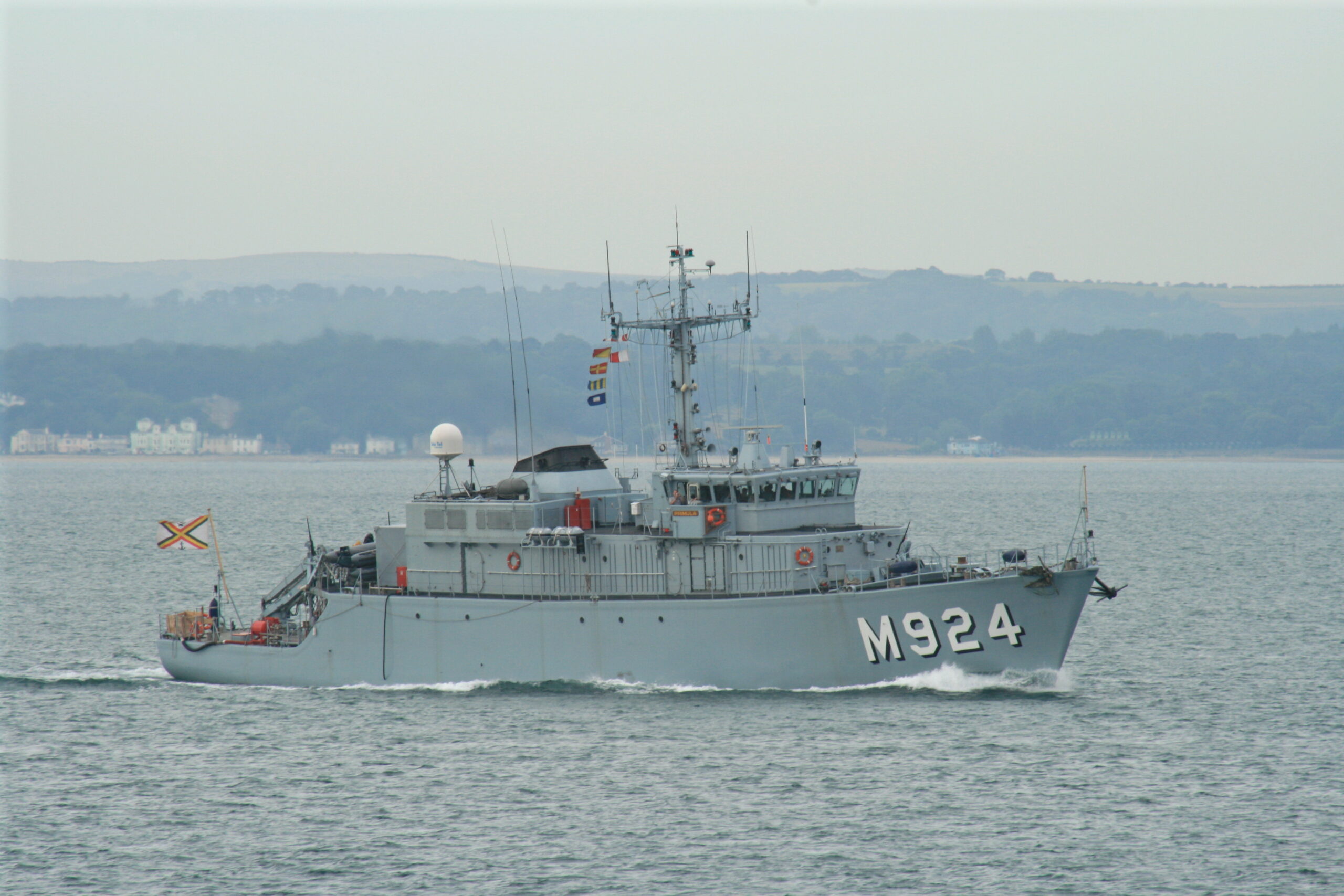
The Belgian Council of Ministers has approved the free transfer of four remaining Tripartite mine countermeasure (MCM) vessels to Bulgaria.
Bulgaria will modernize and maintain the aging vessels for 24 million euros ($28.45 million), with most of the work contracted to Belgian firms.
The deal also covers spare parts and a tactical simulator. It comes as Belgium and the Netherlands prepare to field their next-generation rMCM (Replacement Mine CounterMeasure) vessels later this year.
The Tripartite ships will be deployed in the Black Sea to protect sea lanes from drifting Russian mines, bolstering the Bulgarian Navy and reinforcing regional support for Ukraine.
“Bulgaria will receive ships that it can deploy in the Black Sea and our Belgian industry will receive a boost of 24 million euros in employment and high-tech contracts,” Belga News Agency quoted Belgian Defence Minister Theo Francken as saying.
“In this way, we are strengthening not only NATO but also our own economy.”
Dutch MCM Vessels to Bulgaria
Meanwhile, the Netherlands has indicated its readiness to contribute three of its Tripartite, or Alkmaar-class, MCM vessels to the arrangement, with administrative and technical preparations underway for a memorandum of understanding among the three governments.
In addition to the involvement of Belgian firms in the vessels’ modernization, the deal reportedly stipulates that Bulgaria will provide Ukraine with assistance in the form of training and coaching for crews operating this class of ships.
Ukraine received two Tripartite MCM vessels from Belgium and the Netherlands in June.
The class was jointly developed by Belgium, France, and the Netherlands under a late-1970s agreement.
A total of 35 vessels were built for the three navies, out of which around 22 are currently operational.