The US may need a dedicated military and intelligence unit to confront nuclear proliferation threats, according to Henry Sokolski, executive director of the Nonproliferation Policy Education Center in Virginia.
Sokolski, who served as the Department of Defense’s deputy for nuclear weapons policy from 1989 to 1993, said Washington needs a “new big stick” in its effort to limit the spread of nuclear weapons and suggested the White House consider creating a “Nonproliferation Enforcement Initiative.”
The proposed unit would work with US geographic and technical commands to prepare follow-on strikes against Iran’s nuclear sites, block the transfer of nuclear weapons, and address other related threats, Sokolski wrote in a Breaking News op-ed.
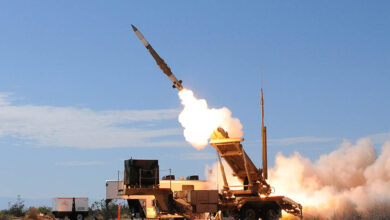
The concept envisions an intelligence team drawing on sources beyond traditional partners such as Israel and the United Nations’ International Atomic Energy Agency, and a separate, rapid-response force equipped with bunker-busting weapons to strike nuclear sites if necessary.
Sokolski noted that setting up a nonproliferation enforcement unit would likely require reallocating resources within US Strategic Command and could face resistance inside the Pentagon.
He said the move would signal US resolve, deter adversaries, and reassure allies concerned about Iran and other emerging nuclear powers, the ex-nuclear policy representative noted.
Fixing Inconsistencies
Sokolski argued that a dedicated nonproliferation enforcement arm would help establish consistent US “red lines” after decades of uneven policy that has been jumping between enforcement and negotiation.
Recent US strikes on Iranian facilities, along with President Donald Trump’s pledge to prevent nuclear weapons proliferation, have renewed debate about how Washington should strengthen its posture, Sokolski highlighted.
Washington has often applied nonproliferation erratically, he said. Under Presidents Gerald Ford and Jimmy Carter, Washington blocked plutonium reprocessing in South Korea, Taiwan, and Brazil, but was less forceful with Pakistan, India, and Iran.
Iraq was an exception, as US forces dismantled its nuclear infrastructure and imposed strict inspections. Later agreements with North Korea and Iran, however, reflected a more flexible approach, favoring negotiation over firm enforcement.
Meanwhile, Saudi Arabia is emerging as a potential concern. The US is negotiating a nuclear cooperation agreement with Riyadh that could allow uranium enrichment, while Saudi officials have warned they may pursue nuclear weapons if Iran succeeds.
Another risk is Iran potentially withdrawing from the 1968 international nuclear nonproliferation pact, similar to Pyongyang in 2003, which went on to develop a nuclear weapon within three years.
It remains unclear how the Trump administration would respond if Iran follows a similar path.