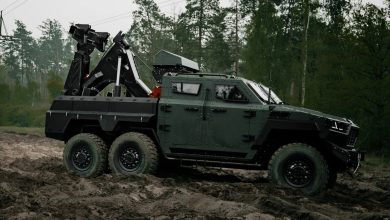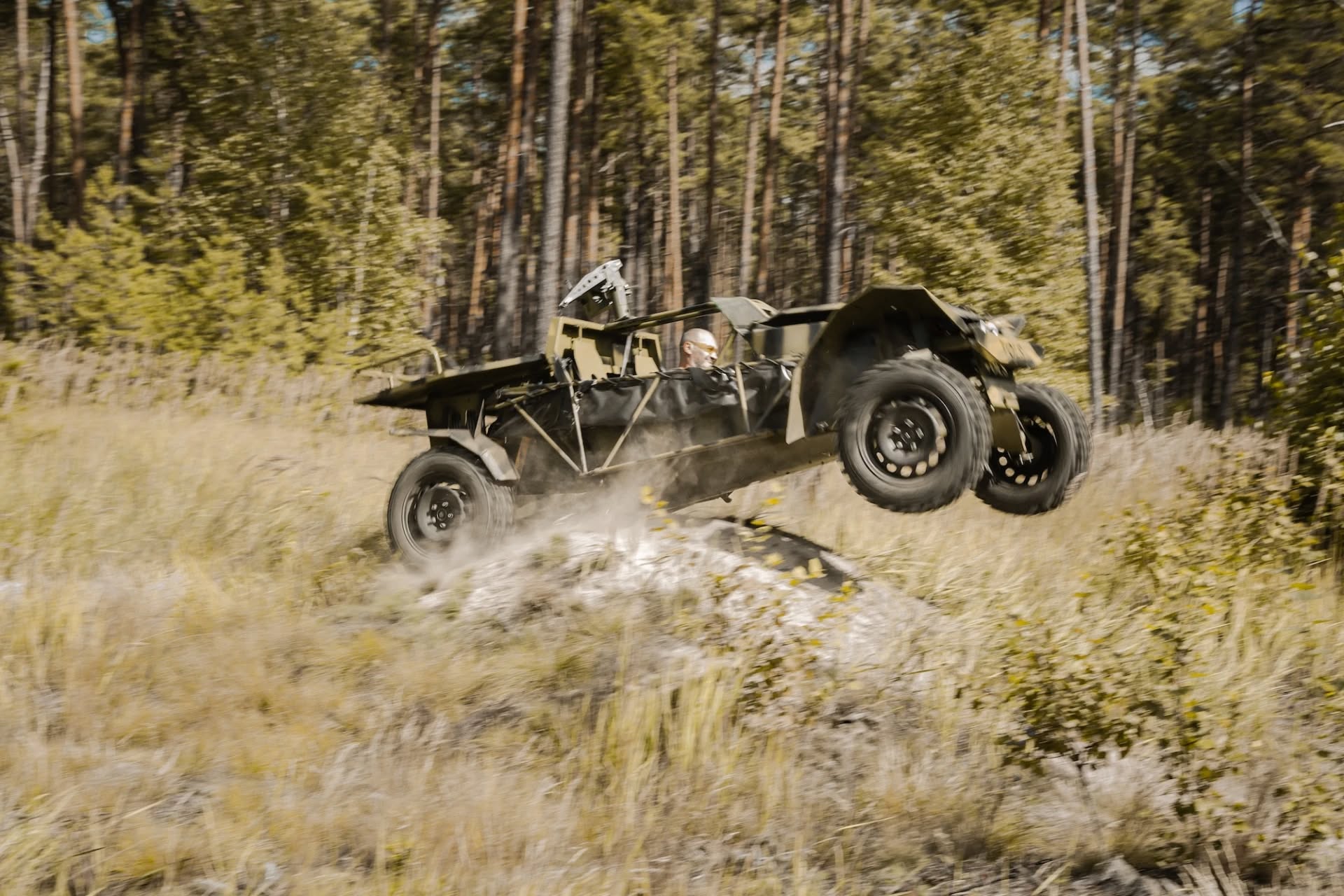
Ukrainian Armor is preparing to launch serial production of the VOLS buggy light tactical vehicle, with plans to build several hundred units per month, subject to orders from the Ukrainian Ministry of Defence.
Anticipating a contract, CEO Vladyslav Belbas said there is strong demand for such vehicles on the battlefield due to their unique characteristics.
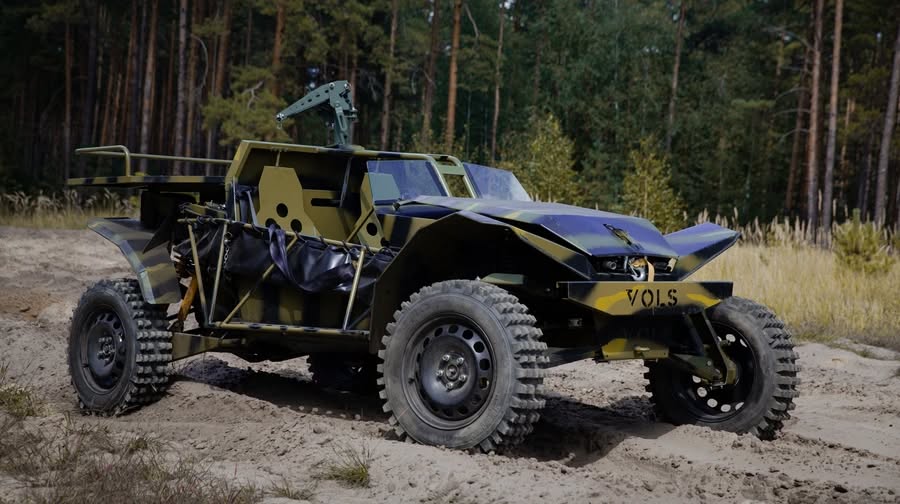
With its minimalistic design, the vehicle is intended to deliver speed, maneuverability, stealth, firepower, and frontline utility beyond that of other platforms.
First produced in 2022, the VOLS has reportedly performed well during its deployment in the Belgorod region, where it was used to evacuate about 200 wounded soldiers under fire.
Developed on the chassis of the Soviet VAZ car, the platform has undergone several design changes over the last 3.5 years informed by combat experience.
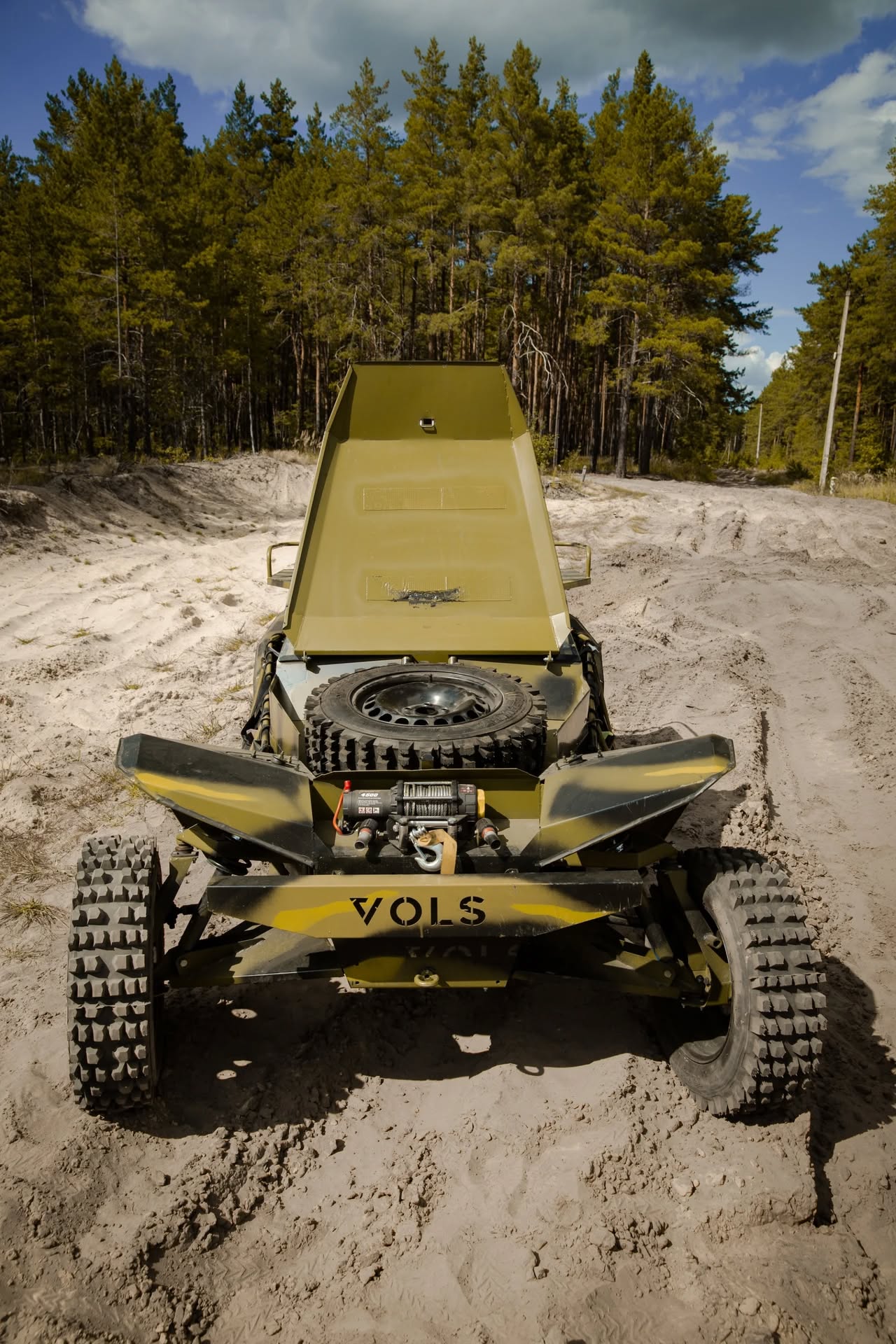
The latest iteration features added luggage compartments, medical stretchers mounted on both sides, and improved handling, according to Mezha.Media, which cited designer Volodymyr Sadyk.
Designed for two crew, the platform can carry up to 500 kilograms (1,102 pounds), including 300 kilograms (661 pounds) of cargo in its front and rear compartments.
Moreover, it can be fitted with a 12.7mm machine gun to engage enemy positions while on the move.
Designed for Agility
The vehicle’s high ground clearance of 38 centimeters (15 inches), combined with its low overall height of 1.4 meters (4.6 feet), enables rapid movement across rough terrain.
With its low profile, the buggy is harder to detect on the front line than taller SUVs or pickup trucks, while offering greater maneuverability than unmanned ground vehicles.
The prototype is powered by a 1.9-liter, 115-horsepower turbodiesel engine, while other engine types are being considered for serial production, according to Mezha.Media.
The vehicle’s fuel tank capacity is 38 liters and it has an operational range of 300 kilometers (186 miles).
“Our goal is for the buggy to be cheaper than a pickup. It must be fast and reliable. These vehicles are not meant to replace cargo transport in the rear — they are designed for combat tasks,” Belbas said.
“On the front, the buggies can be used to transport the wounded, deliver ammunition, perform maneuverable defense or offense, or conduct quick raids behind enemy lines.”
Mismatch With Government Requirements
Despite the improvements, there remains a mismatch between the company’s production plans and the government’s requirements, Belbas said.
“When we approached the ministry and started setting requirements for these buggies, we encountered bureaucratic inefficiency,” he explained.
“They tried to turn the buggies into armored vehicles, seating four people inside.
That’s no longer a buggy but a vehicle, which also affects the cost. Our fundamental position is to follow the concept dictated by the front and the users of these vehicles.”
Belbas said the vehicle’s production cost should not exceed $20,000, though it is still too early to provide an exact estimate as the codification process is not complete.