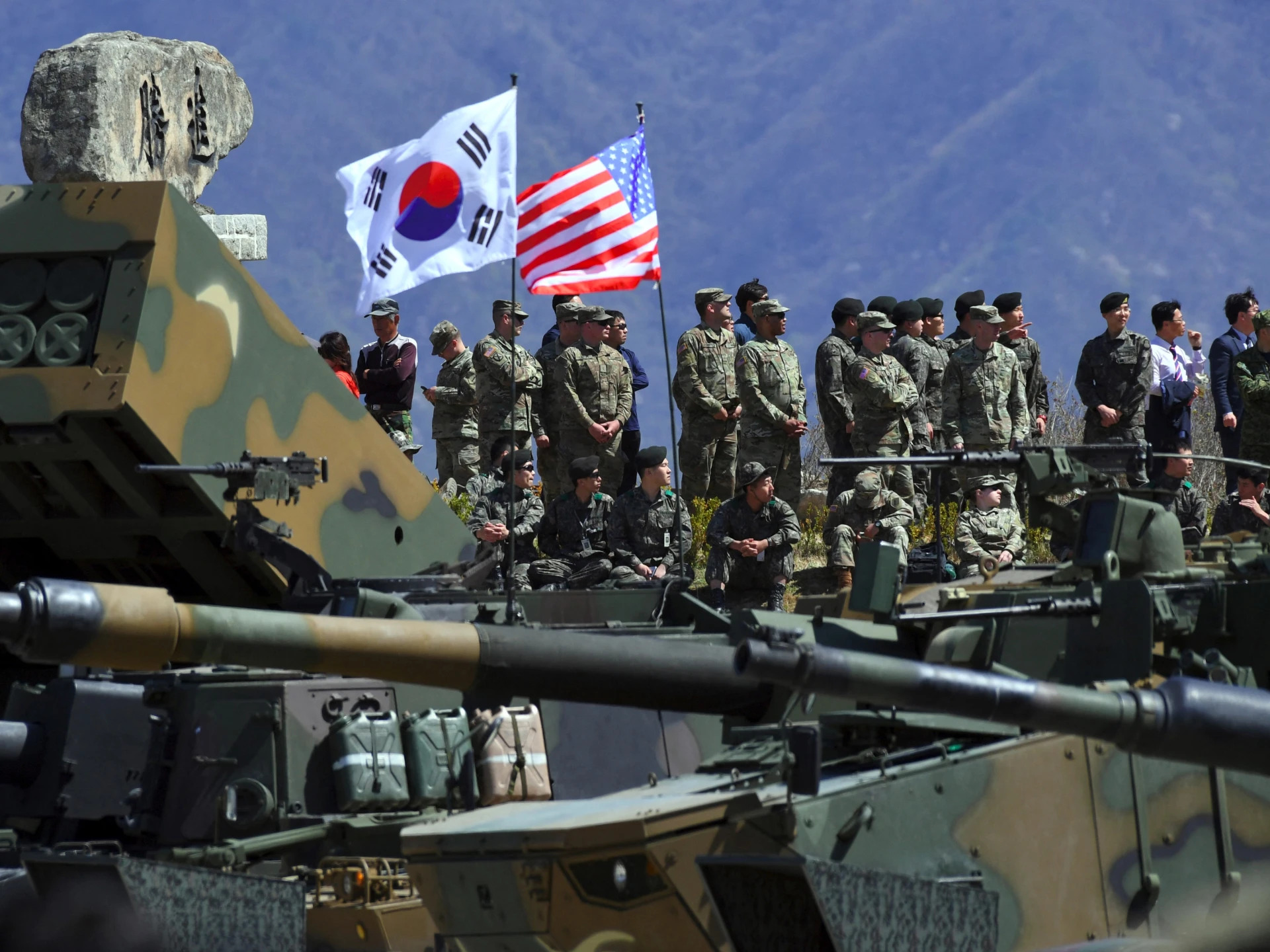
South Korea aims to reclaim wartime operational control (OPCON) from the US, a role Washington has assumed from around the time of the Korean War.
Since 1994, Seoul’s Joint Chiefs of Staff has held peacetime OPCON, but efforts to regain wartime OPCON from the US-led Combined Forces Command have stalled over concerns about its readiness in command, control, surveillance, and reconnaissance.
However, President Lee Jae Myung signalled a firm commitment to achieving this goal as a key part of his administration’s foreign and security policy under a five-year policy roadmap, Korea Times reported.
The roadmap is not a final and official government plan yet, Lee emphasized. It is still open to revision based on input from the public and industry experts.
Meeting the Conditions
The two allies have previously agreed on a “conditions-based” approach for transferring the authority to command military forces during wartime back to South Korea.
This requires Seoul to demonstrate capabilities in countering North Korea’s nuclear and missile threats, maintaining interoperability with US forces, and ensuring a stable security environment on the Korean Peninsula.
To support its goal, South Korea is set to conduct major upgrades to its Allied Korean Joint Command and Control (AKJCCS) System, scheduled to be operational by 2029.
The AKJCCS is the central, digital backbone for combined operations between Seoul and Washington, with improvements to include cloud-based servers, AI-assisted automation, real-time interpretation tools, and enhanced cybersecurity.
Meanwhile, the Asian country is becoming one of the world’s top defense exporters, selling domestically developed weapons such as the K2 main battle tank to Poland and the FA-50 fighter jet to the Philippines.
In addition, it has been working on enhancing the capabilities of its key weapons systems: the K9 howitzer, Chunmoo rocket launcher, and Cheonma missile system.