The European arms industry has been expanding at a record pace — three times the rate since the outbreak of war between Russia and Ukraine in 2022, according to the Financial Times.
Satellite images tracked changes at 150 facilities across 37 Europe-based companies tied to ammunition and missile production, revealing approximately 7 million square meters (75.35 million square feet) of new industrial capacity added.
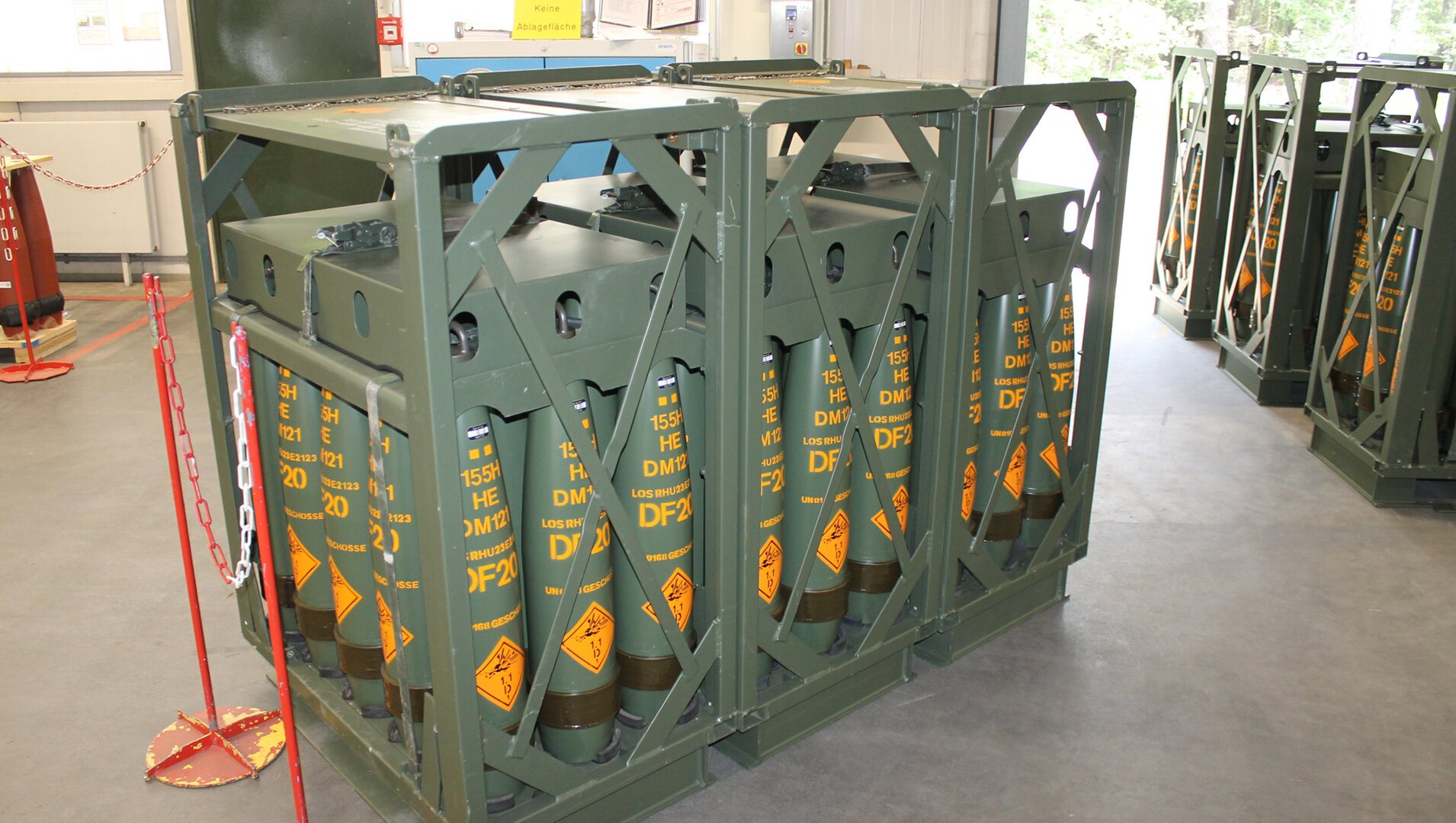
The British daily also identified expansion at sites supported by the Act in Support of Ammunition Production (ASAP), an EU program with an allocated budget of 500 million euros ($580 million) to achieve an annual ammunition output of 2 million shells by the end of 2025.
William Alberque, a senior adjunct fellow at the Asia Pacific Forum and former NATO arms control director, described it as “a deep and structural change.”
“Once you’re mass-producing shells, the metals and explosives start flowing, which drops the cost and complexity of missile production.”
This development comes amid Russia’s rapid ammunition production compared to NATO and its plans to allocate $1.1 trillion to military rearmament by 2036, its most extensive arms program since the collapse of the Soviet Union in 1991.
European Expansion
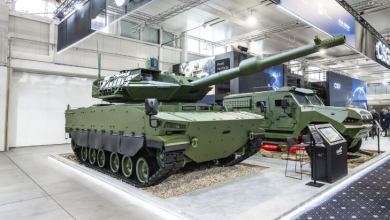
Among the most prominent examples is Germany’s Rheinmetall and Hungary’s state-owned N7 Holding joint venture factory in Várpalota, Hungary, that opened in 2024. It is meant to produce KF41 Lynx infantry fighting vehicles and Leopard 2 tank rounds, as well as 155mm artillery shells.
Meanwhile, MBDA is boosting missile production in Germany, while BAE Systems is projecting a 16-fold increase in 155mm artillery shell output through its new explosives facility in Wales.
Funding Efforts
At the June NATO Summit in The Hague, allies agreed to raise defense spending to 5 percent of GDP by 2035, a sharp increase from the previous 2 percent target.
This includes at least 3.5 percent for core military expenditures and 1.5 percent for infrastructure, cyber, civil preparedness, and industrial capacity.
The 800-billion-euro ($843 billion) EU ReArm Europe initiative, unveiled in March, emphasizes joint procurement and boosting both domestic and Ukrainian defense capabilities.
It involves allowing member states to increase defense spending, introducing a new 150-billion-euro ($160 billion) defense loan tool, and redirecting funds from the existing EU budget to defense-related investments, as well as improving financing mechanisms and broadening financial sources.