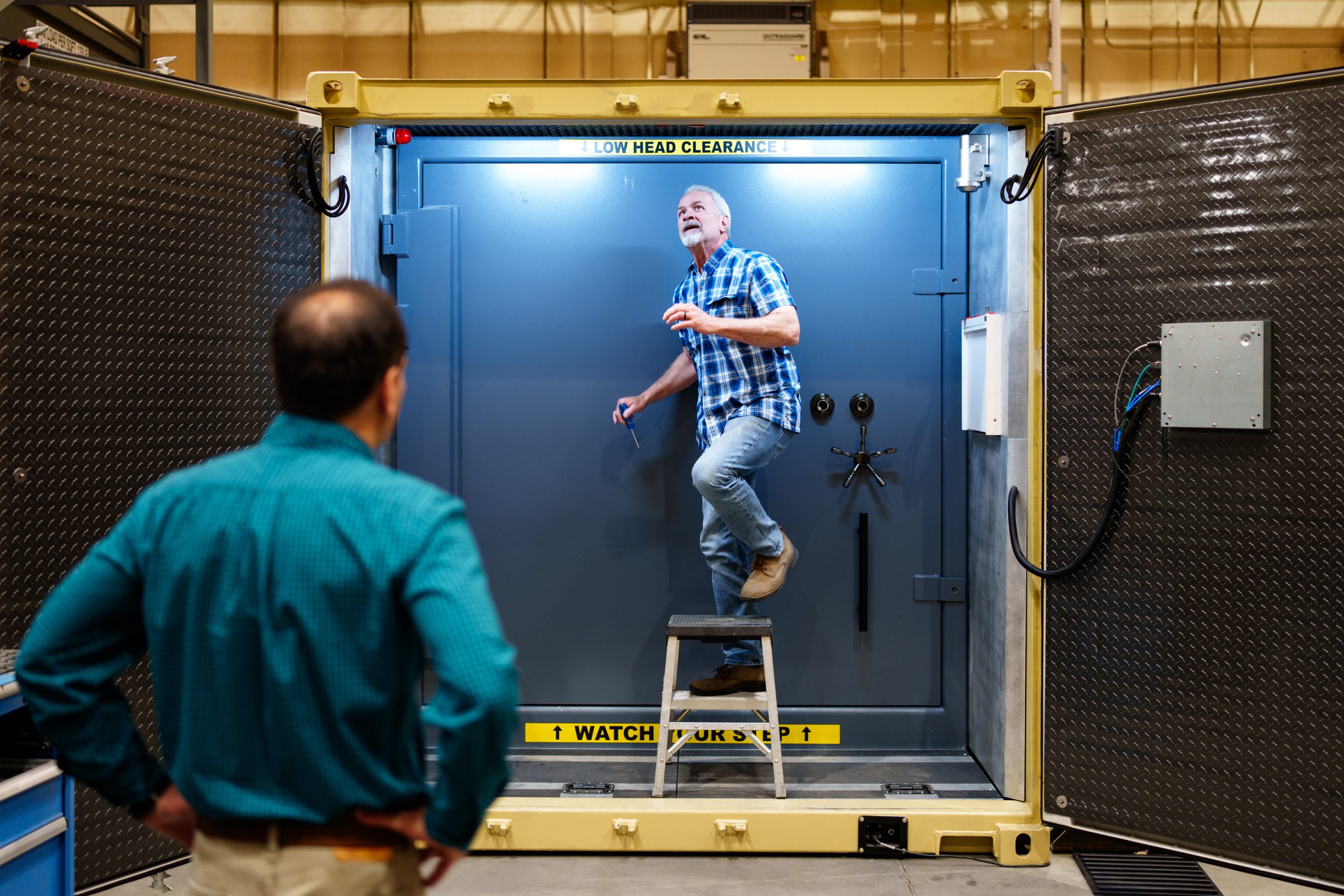
US state-owned research and development center Sandia National Laboratories has produced a high-security vault supporting rapid transport of nuclear weapons between temporary and remote sites.
The capability, integrated into a standard 20-foot (17-meter) shipping container, was built in six months in response to a request from the National Nuclear Security Administration’s Stockpile Responsiveness Program.
It was unveiled shortly after the Department of Defense carried out a surprise bombing to degrade Iranian nuclear facilities, an operation that exposed the risks of nuclear materials at fixed locations.
According to the laboratory, the nuclear vault was constructed using a fast, flexible design process that prioritized speed and creativity over strict requirements.
Rather than setting a fixed deadline, experts focused on adopting the best performance possible within size and weight limits and chose a final design from 10 design options in just two weeks.
Assembly started with a 1:14-scale model of the vault for $500, complete with a ramp and mock weapons, that helped gather early feedback and shape design reviews.
To further optimize timelines, experts used 3D modeling to acquire key parts such as the custom vault door before finalizing the design. Concurrently, a dedicated engineering group worked with fabricators to maintain quality and schedule.
They also built the vault’s access controls, alarms, and backup power using 3D printing, reusable parts, and off-the-shelf tech, cutting development time in half.
As components arrived, staff handled welding, machining, and assembly using some of Sandia’s largest equipment.
Sandia is moving into the next stage of the project, which includes building two more full-scale prototypes and participating in an upcoming US military joint exercise to evaluate hardware performance under real-world conditions.
The technology is also slated for transition to industry for wider production and use.