British Army Trials Drone Swarm-Based Counter-UAS System

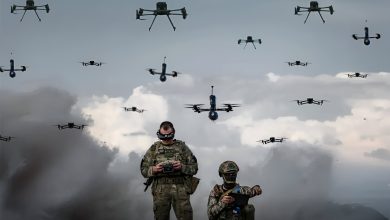
The British Army has tested a counter-drone system based on a swarm of networked interceptor and sensor drones.
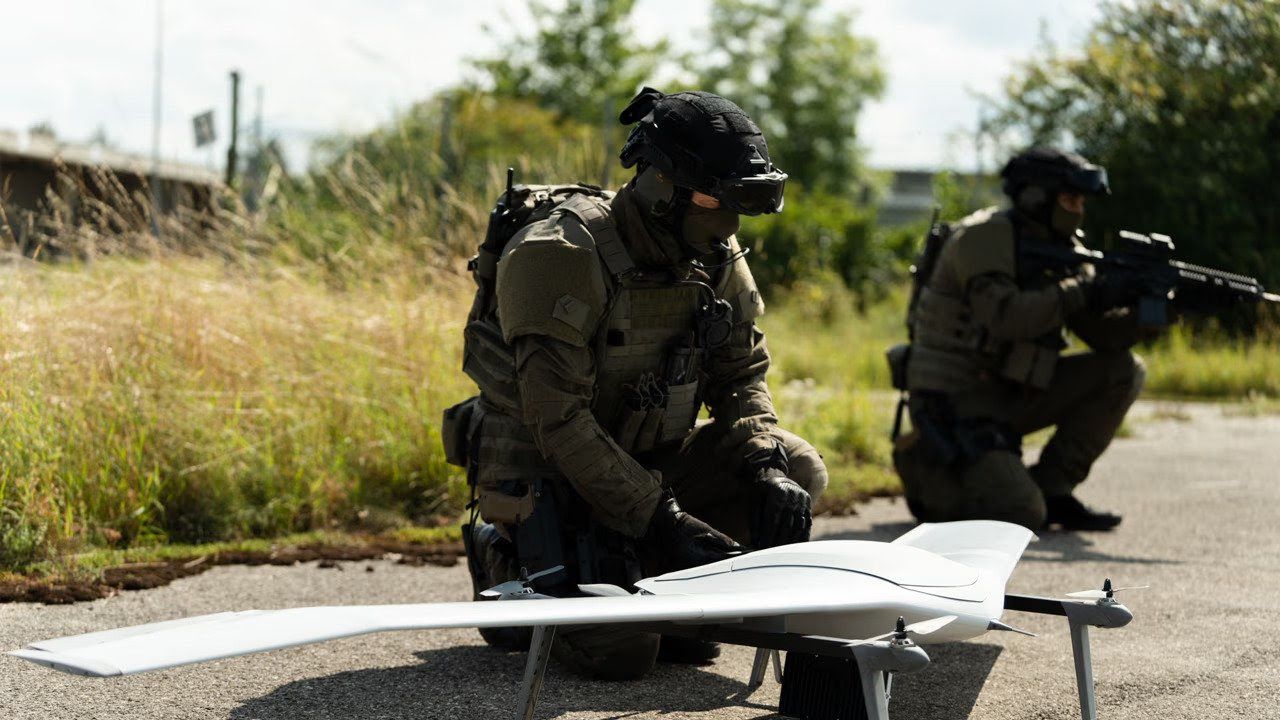
Named the Sentinel, the system was trialed as part of Project Vanaheim, an initiative to identify and deploy new counter-drone capabilities rapidly.
German startup Alpine Eagle developed the system to overcome the challenges faced by ground-based counter-drone systems in detecting targets that fly behind hills and trees.
Moreover, unlike ground-based systems, it is not susceptible to counterattacks.
The system is suitable for defending fixed installations and troop convoys.
Airborne Counter-Drone System
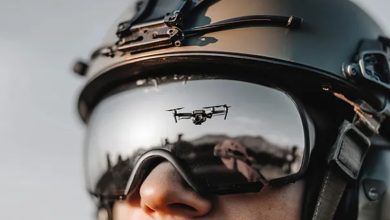
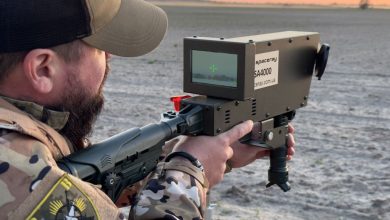
Sentinel consists of a swarm of radar-equipped drones to detect enemy unmanned aerial systems, including small drones, micro-drones, and loitering munitions.
The platforms can detect a small drone the size of a DJI Mini from a range of 1 kilometer (0.62 mile), and a larger one from 4 kilometers (2.48 miles).
In addition, the system can locate and identify larger aircraft such as fixed-wing planes and helicopters, as well as ground vehicles.
Onboard AI software and edge computing correlate sensor data across the swarm and enable target discrimination in a cluttered environment.
The system is designed to operate in contested environments and can be operated by a single person.
Kinetic Role
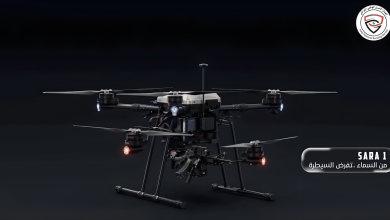
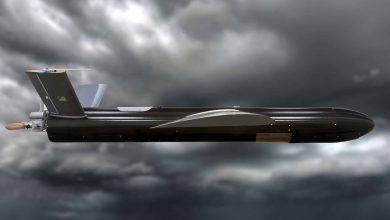
In addition to detection, the Sentinel drones can be armed with air-to-air munitions to take down hostile targets.
Each of the drones can carry a 300-gram (10.5-ounce) kinetic payload and release it utilizing radar tracking provided by the sensor drone.
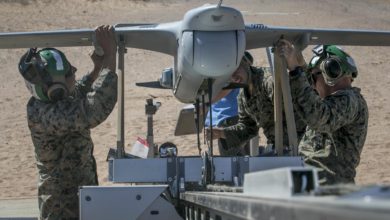
The drone has a range of 5 kilometers (3 miles). For longer range, it can be mounted on a fixed-wing aircraft.
For Russian FPV Drones
Project Vanaheim is a collaboration of the British and US armies and involves a series of tests drawn from the lessons learned from the Ukraine war.
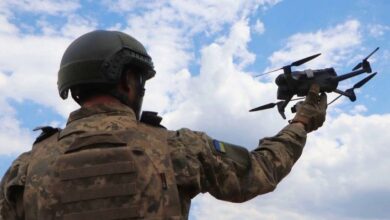
Sentinel was tested at Vanaheim 3 in Germany as part of an exercise to knock out Russian first-person view (FPV) drones.
Russians have increasingly begun using “fiber-optic wire control measures” to target Ukrainian FPV drone operators.
Based on FPV drones, the new concept of drone warfare avoids disruption by radio-frequency jamming and requires a kinetic countermeasure in the form of expendable kamikaze drones.
A total of 20 counter-drone solutions were tested as part of Vanaheim 3 in June. For the next round in Poland later in the summer, only eight solutions will be selected.
Following the round, an acquisition process to purchase a small number of solutions is expected for trials to further develop tactics, techniques, and procedures.
The selected systems are expected to take part in Exercise Convergence Capstone 6 in the US next summer.