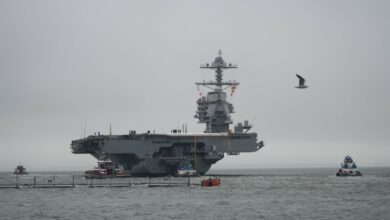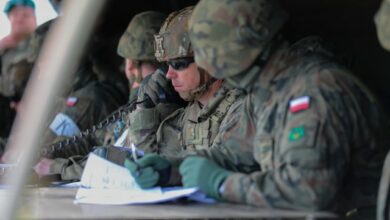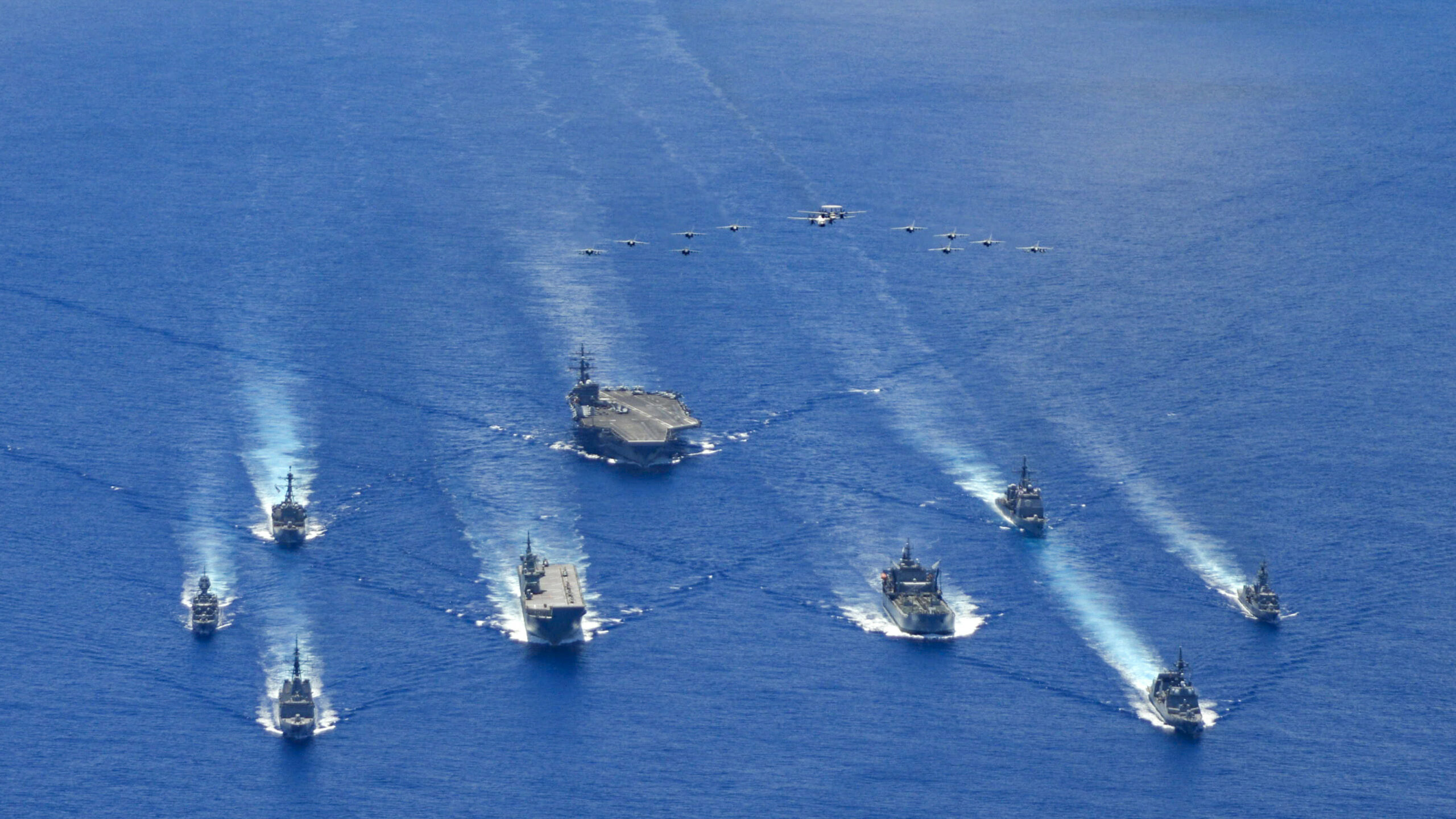
Australia, Japan, and the US have signed their first trilateral agreement to improve logistics and interoperability for maritime operations.
The deal aims to streamline the exchange of information, technology, and procedures to support joint missions more efficiently, including routine operations and emergencies.
It also promotes better logistics integration into naval exercises, focusing on ship and aircraft repairs, airfield restoration, and medical evacuations.
“Sustainment in depth is a primary objective,” said Vice Adm. Jeff Jablon, Deputy Chief of the US Naval Operations for Installations and Logistics.
“We have robust logistics partnerships with Japan and Australia to ensure we can provide the right material and services at the right place, at the right time to mutually support our maritime forces, from day-to-day training during peacetime through contingencies.”
Expanding Cooperation
The US Navy, Japan Maritime Self-Defense Force, and the Royal Australian Navy already cooperate under existing bilateral efforts, including in missile reloading and refueling at sea.
The new agreement reinforces this foundation, further expanding joint capabilities.
The US Navy’s Naval Sea Systems Command is working on testing prototype systems designed to transfer missile canisters between ships at sea, even in rough conditions.
Compatible with the MK-41 vertical launchers used by both US and allied vessels, the systems are set for further testing in 2025 and 2026.
This builds on earlier cooperation between the US and Australian navies, which have jointly worked on missile rearming efforts in the Indo-Pacific.
Moreover, the US, Australian, and Japanese replenishment ships already refuel one another during joint exercises and other cooperative missions.
Over the past decade, Washington has equipped leased commercial tankers with consolidated tanking (CONSOL) systems, enabling them to refuel military oilers at sea.
This allows oilers to stay on station longer and support forces without returning to port.
Since 2022, the US has expanded CONSOL operations and training with Australia, Japan, and other partners, and is now exploring ways to equip partner tankers with this capability.