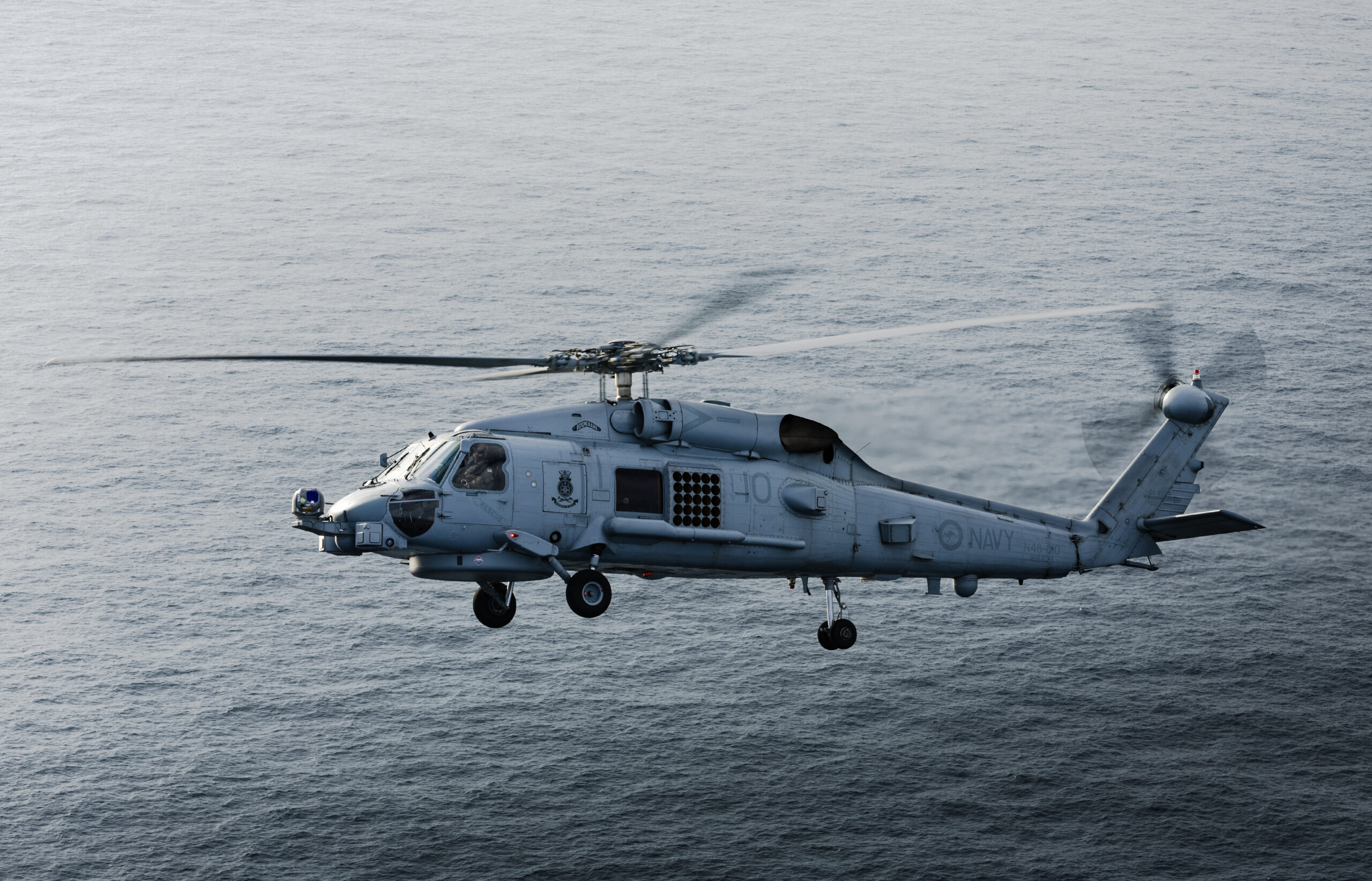
Sikorsky and CAE are enhancing the anti-submarine warfare capabilities of MH-60R Seahawk helicopters operated by the US and Australian navies by integrating Magnetic Anomaly Detection-Extended Role (MAD-XR) systems.
MAD-XR is a compact, high-sensitivity sensor that detects subtle disturbances in the Earth’s magnetic field caused by submerged submarines, allowing helicopters to locate underwater threats more effectively.
The US Navy awarded a $21-million contract in late 2024 for the CAE-designed MAD-XR kits, with options to procure 24 additional units in both 2025 and 2026.
Canberra is set to receive 20 kits, Washington six, and two will be delivered to the US Navy Reserve for evaluation.
Deliveries are expected to conclude by May 2026, beginning with installations across Australia’s Seahawk fleet.
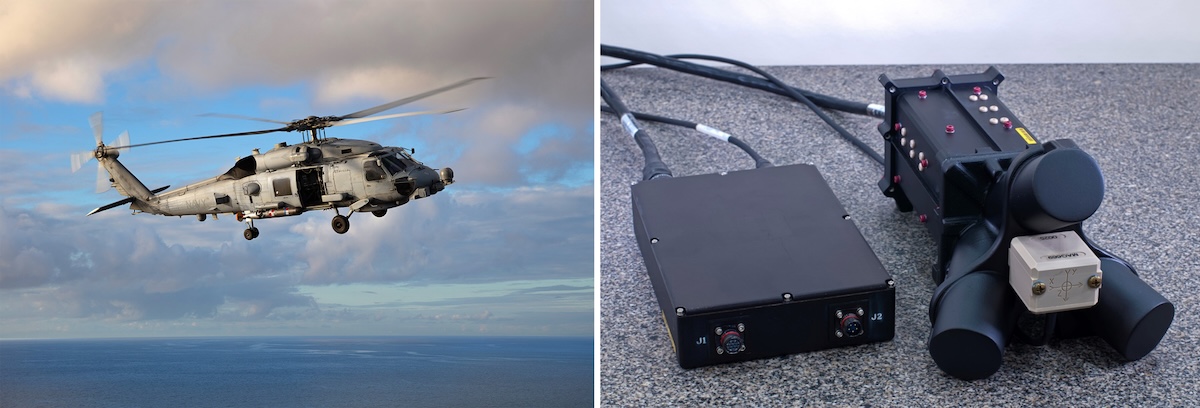
“MH-60R operators now have the option to significantly upgrade their anti-submarine warfare capability using a small, removable device that senses changes in the Earth’s magnetic field caused by large metallic objects in the water,” said Tish Rourke, Sikorsky Maritime Systems VP.
The easy-to-install and non-acoustic digital MAD sensor can operate both independently and alongside other mission systems like aircraft sonobuoys and long-range active dipping sonar, Rourke added.
Sikorsky Australia General Manager Cliff Kyle said that the company looks forward to “playing their role in fielding and sustaining this important and cutting-edge capability, which further strengthens Australia’s MH-60R Seahawks’ fleet lethality.”
The MAD-XR
Weighing less than 20 pounds (9 kilograms) including cabling and mount, MAD-XR is a compact, passive, digital sensor that fits inside the MH-60R’s tail cone without permanent airframe modification.
The sensor includes a processor and interface unit with magnetometers that detect magnetic anomalies. The crew receives an audio alert for a detected object, while a display screen provides range and contact information for tracking.
It marks a major improvement over the AN/ASQ-81 MAD system used on the US Navy’s SH-60B helicopters, which weighed 90 pounds (40 kilograms) and required a reeling cable mechanism.
“We are proud to support their integration on the MH-60R maritime helicopter, ensuring superior performance in diverse operational environments,” said CAE Division President, Defense & Security Canada and Global Operations Lead, France Hébert.